Kerepesi Cemetery (Fiumei Road Cemetery) in Budapest; A Sanctuary Immersed in History, Silence, and Stone Masterpieces
It is no coincidence that visiting historic cemeteries turns into a profound, philosophical, and romantic encounter with the soul and history of a nation for many travelers and globetrotters, rather than a scary or sad experience. For me, it has always been an excellent addition to my list of visited places. If "Père Lachaise" in Paris is the resting place of great artists and world-famous figures, Kerepesi Cemetery holds the same status in Hungary, right in the heart of Budapest; a place where time seems to have stood still among its ancient trees, wide avenues, and magnificent statues to narrate a long, tumultuous story of Eastern European art, politics, wars, and literature.
Established in 1847, Kerepesi is one of the oldest, largest, and most famous cemeteries on the European continent, resembling a national pantheon and an open-air museum more than a conventional burial ground today. Walking through this space feels like walking through the corridors of an illustrated history book. There is no trace of the city's hustle and bustle here; only the sound of birds singing and the dance of tree shadows on the statues of angels that seem to guard the graves. In the following, I will introduce the most prominent figures resting in this soil and their compelling stories—stories that I myself have recently learned and read about, some while writing this and some before visiting the cemetery—but first, I will pass through its remarkably beautiful arcades.
Walking Through the Corridors of History; The Grand Arcades of Kerepesi
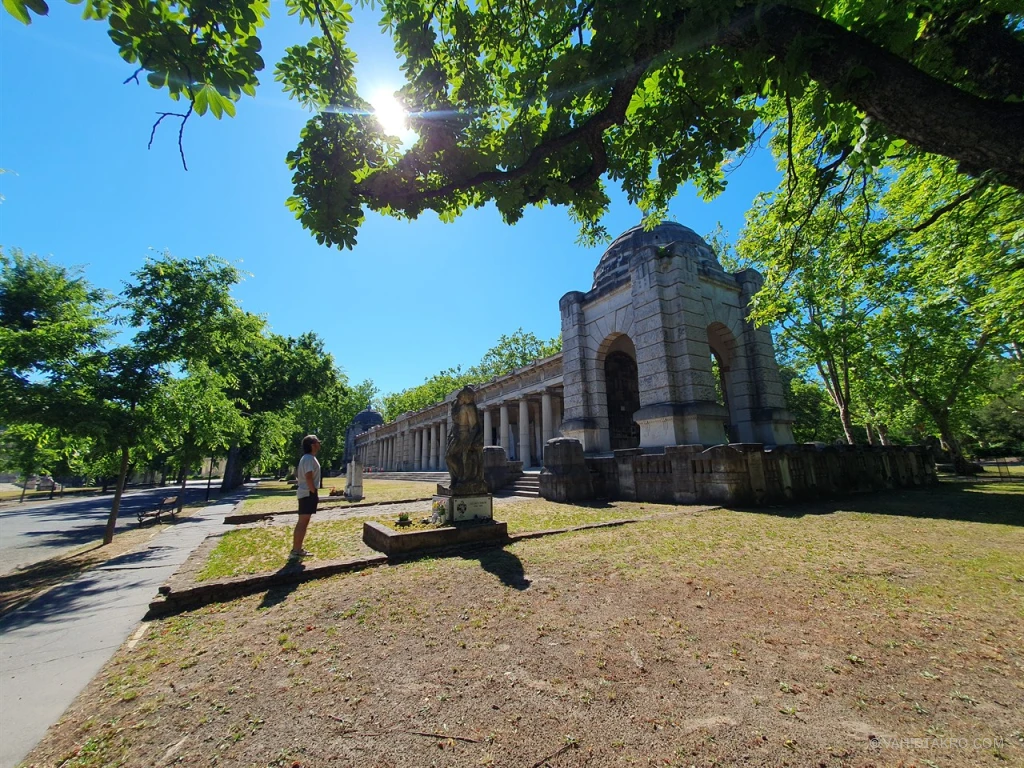
If you walk among the lush sections of Budapest's Kerepesi Cemetery, your eyes will suddenly catch a large marble structure that resembles the columns of the ancient Acropolis in Greece or the grand halls of Rome rather than a cemetery. This is the Northern Arcades of the Cemetery (Árkádok); a place where 20th-century architectural art, sculpture, and tiling intertwine at the highest level, reaching absolute perfection.
A Spectacular Corridor of Stone and Angels
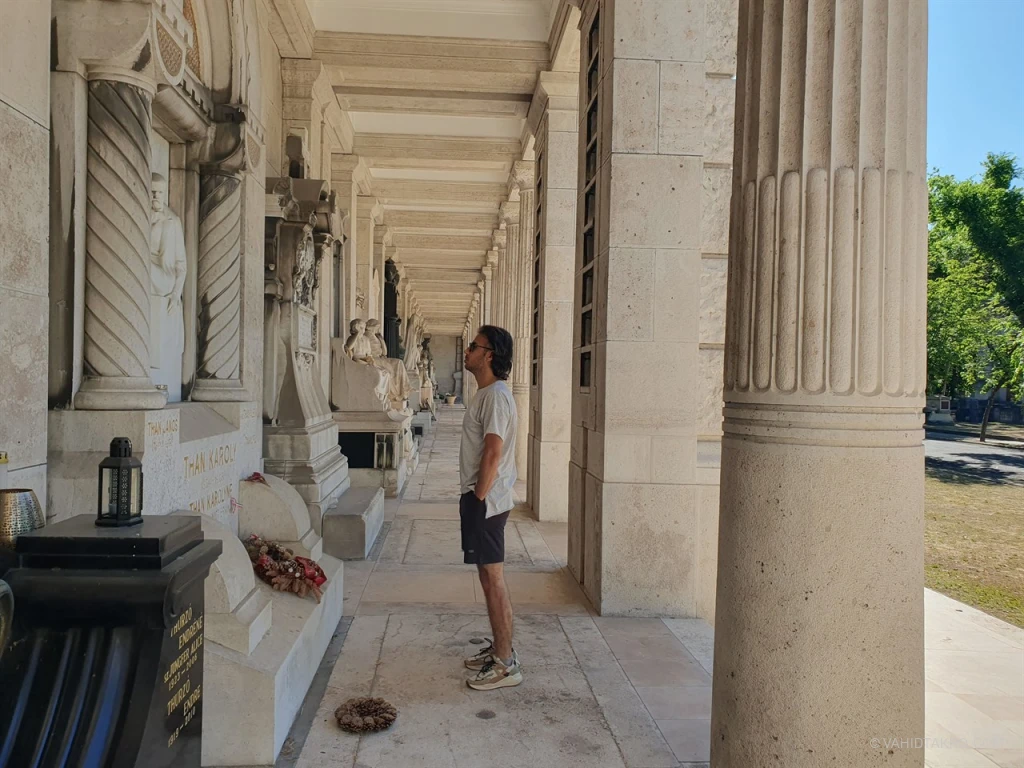
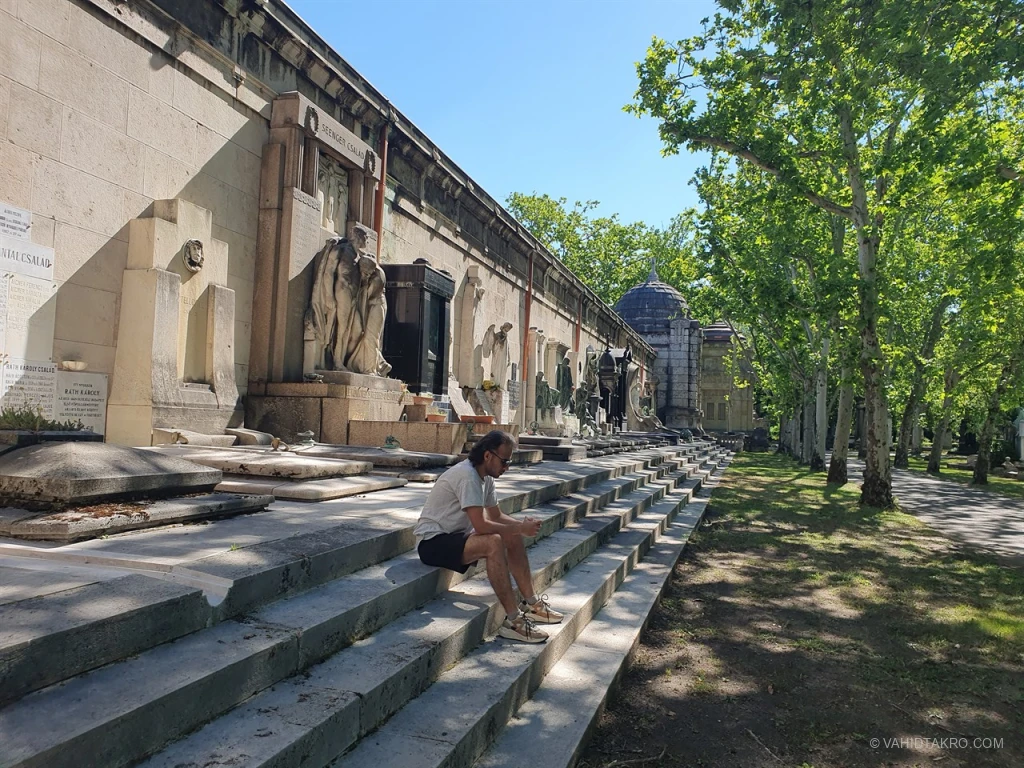
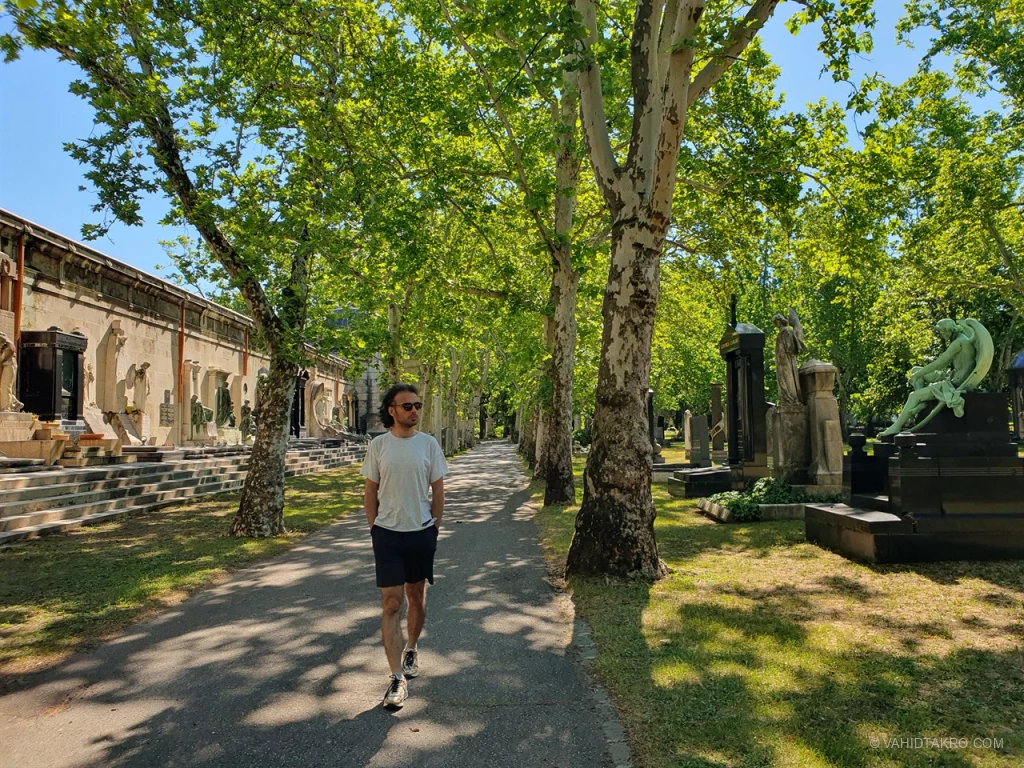
The long corridors of these arcades are guided by rows of finely carved classical columns, reminiscent of the columns of Persepolis in Iran. On one side, there is a continuous wall of family tombs belonging to Hungarian nobility and great artists, carved onto the stone with incredible delicacy. Standing in this corridor and looking at the details of the statues gives you a sense of time travel; it feels as though you are walking through an open-air art gallery. One of the tombs visible in the photo belongs to the Than family, who contributed great scientific and artistic figures to Hungarian society.
Imposing Architecture Embraced by the Sun
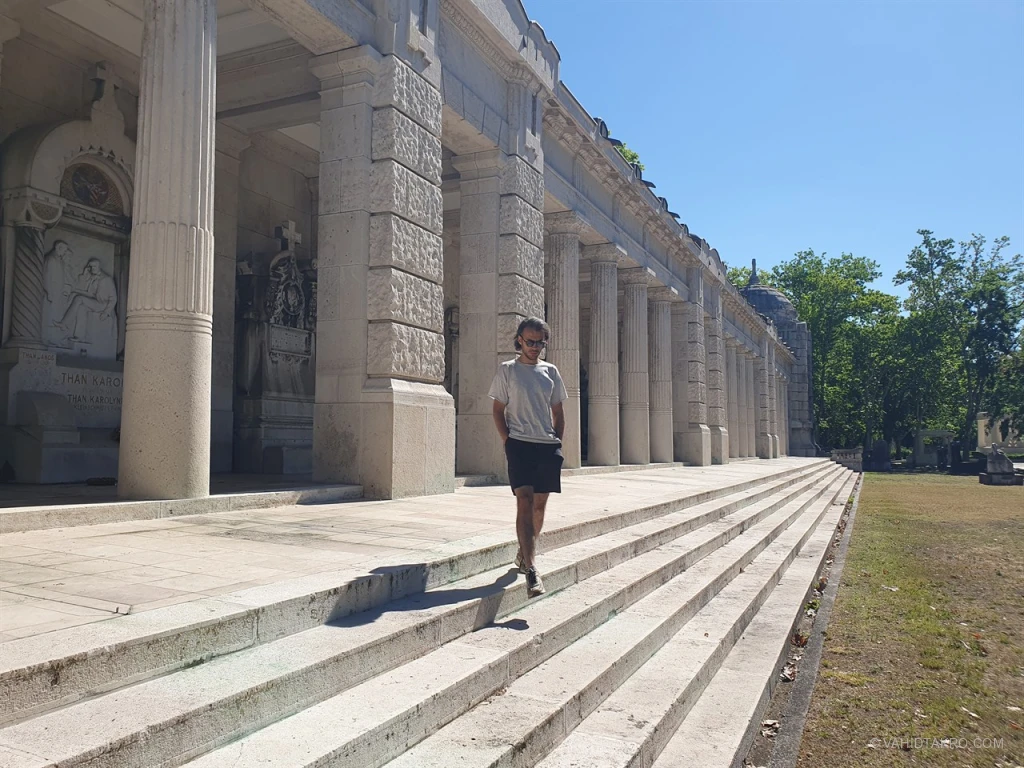
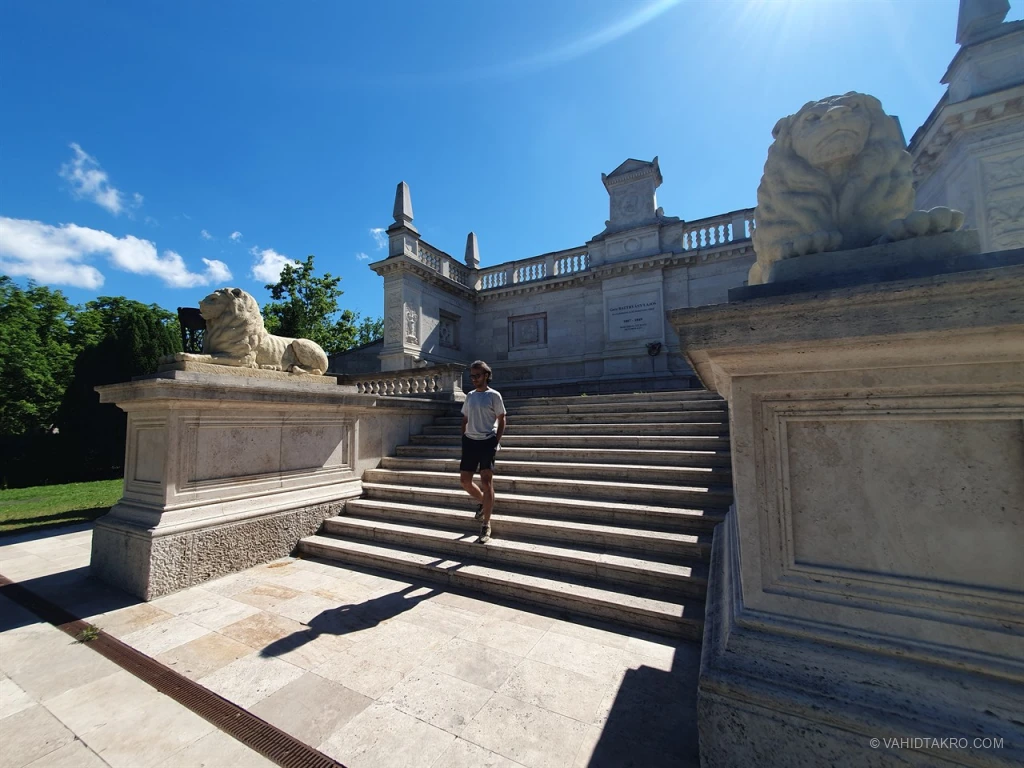
The exterior facade and grandeur of the stone steps of these arcades are exceptionally beautiful. The powerful parallel lines of the columns under the Budapest sun create deep, photogenic highlights and shadows. This structure was designed and built between 1904 and 1908 to serve as a worthy burial place for the city's elite and prominent figures.
The Southern Arcades of Kerepesi; A Grand Symmetry of Art and Serenity
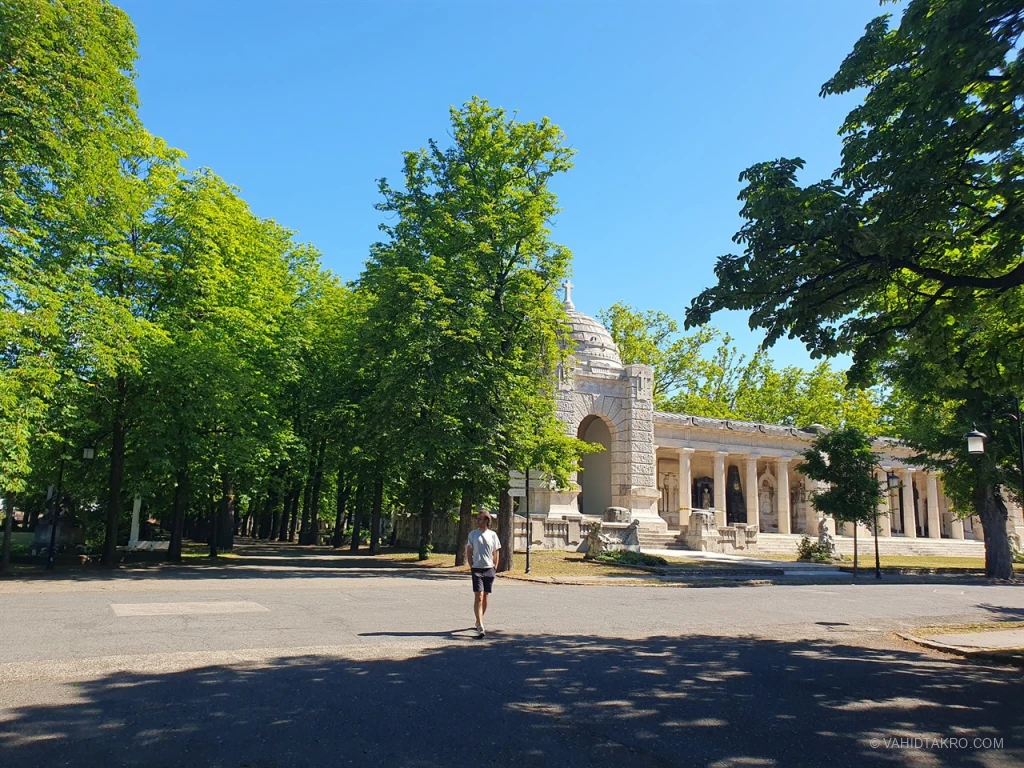
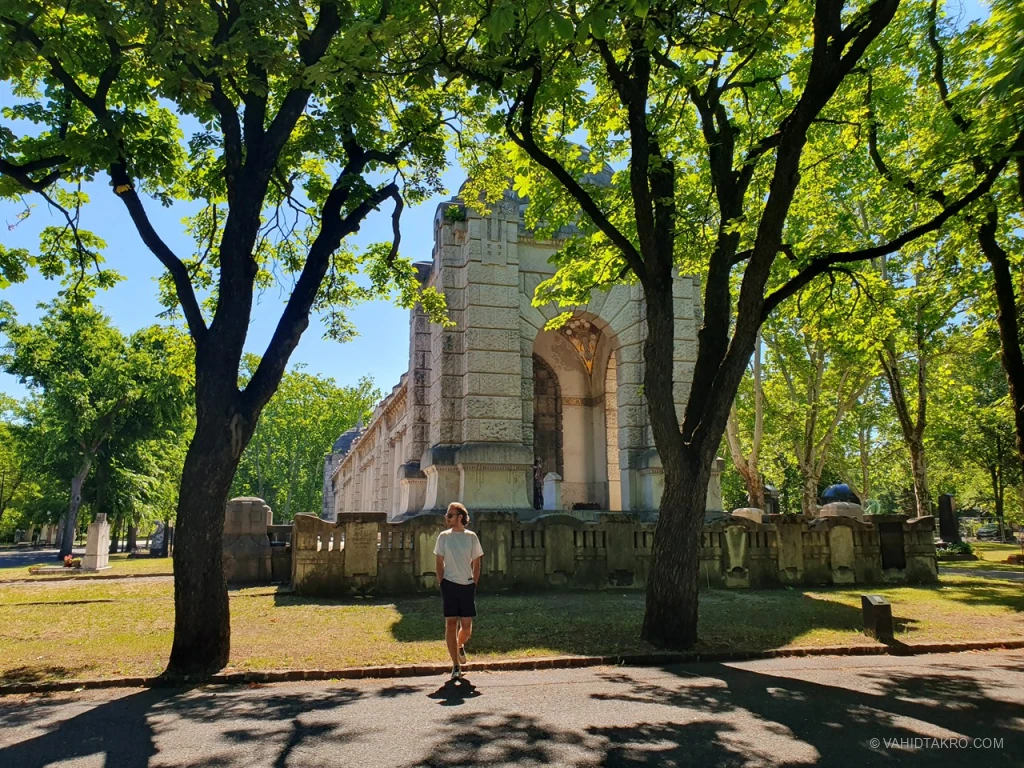
The Southern Arcades (Déli Árkádsor), built parallel to their northern counterpart, form a hall of Neoclassical and Art Nouveau columns. In the early 20th century, it served as a showcase for the art, wealth, and heritage of Hungary's great dynasties.
A Pathway Between Light and Ancient Inscriptions
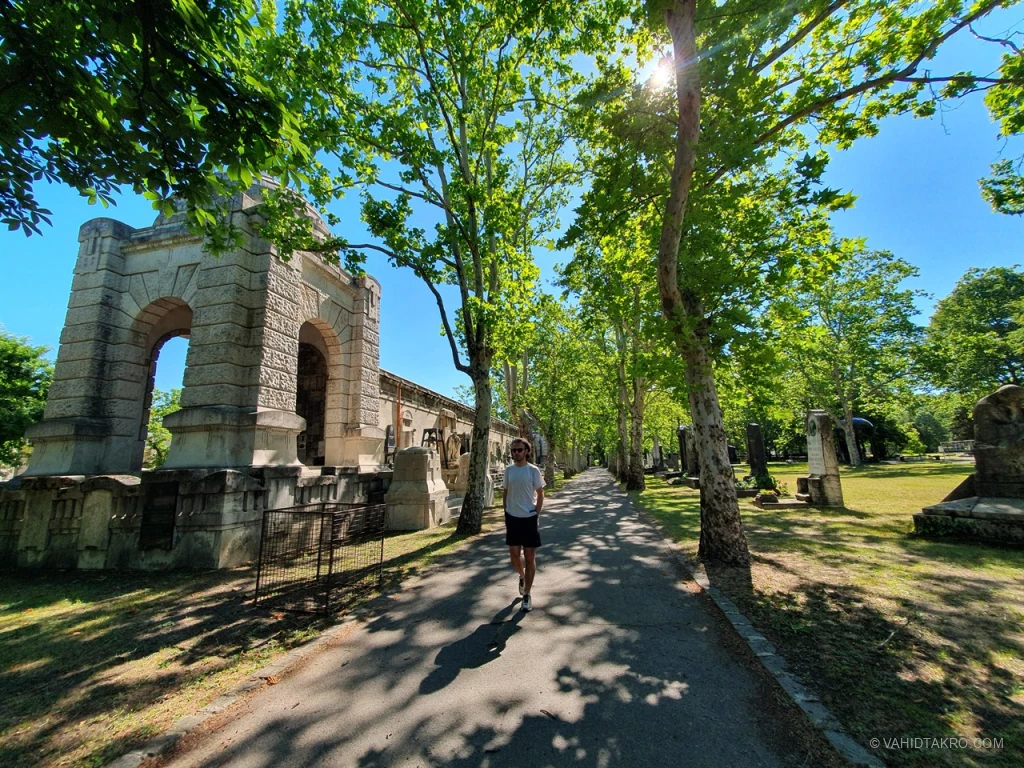
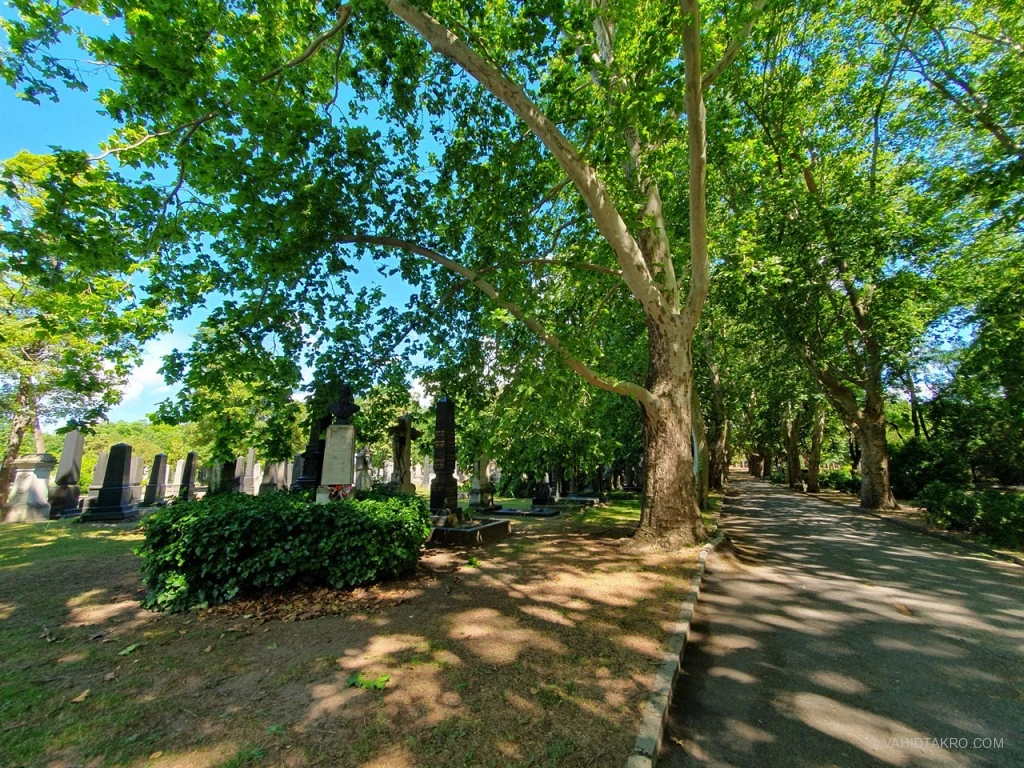
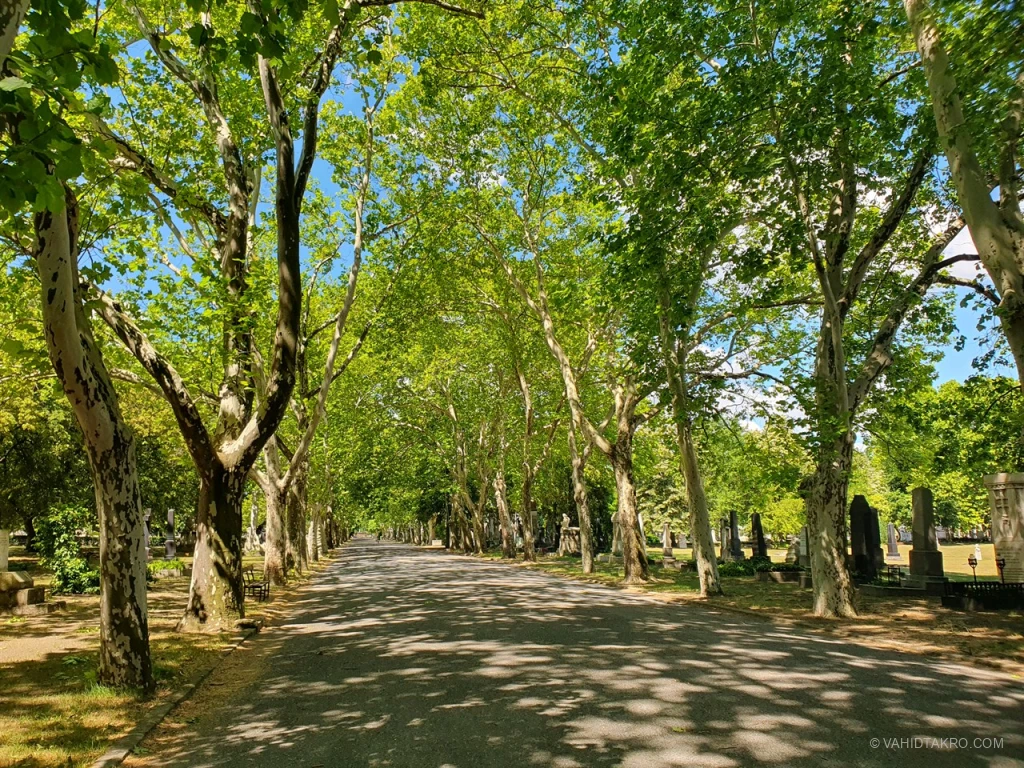
Here you can see the unique atmosphere of the walking path alongside the arcades. Tall, old planetrees towering on both sides of the path form a canopy of green leaves that filters the sunlight, casting magical patterns of light and shadow over the stone structures; I really wished to have a photo of myself amidst these shadows and columns. On one side, rows of tombs and stone angels leaning against the arcade walls are visible, while on the other side, bronze statues and graves in the lush sections stand out.
Masterpieces Carved in Stone
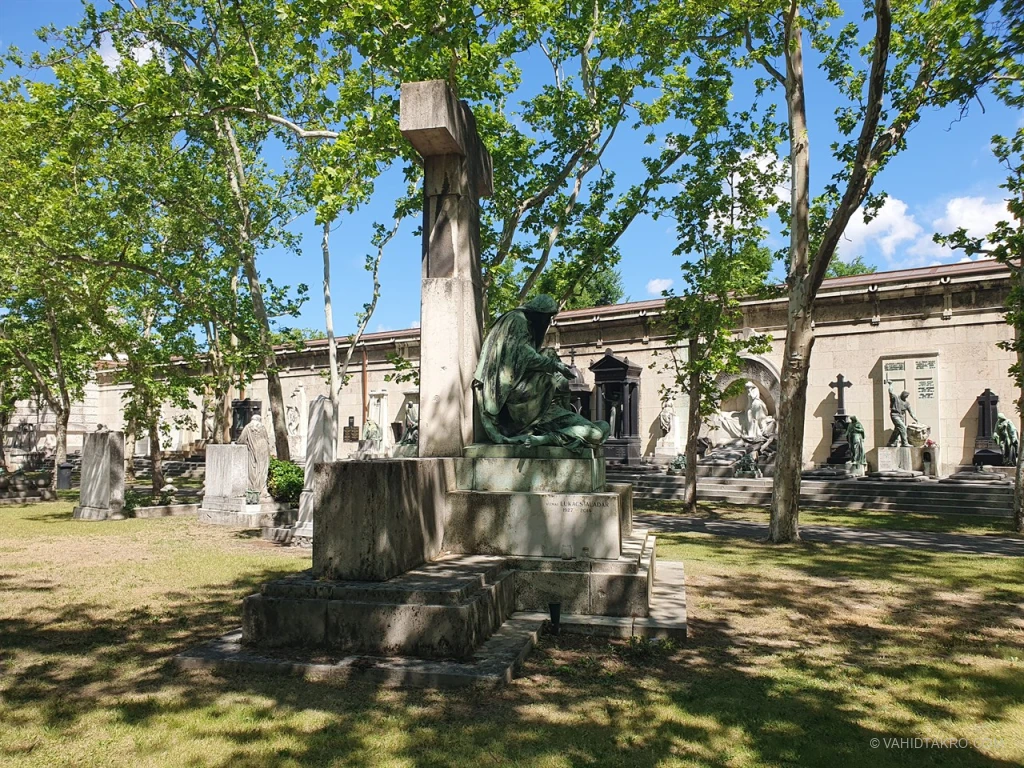
The wide marble steps that serve as the foundation of the structure offer a cozy spot to contemplate history. The family tombs, featuring large stone statues of mourning figures embracing one another, depict a profound embodiment of grief, farewell, and eternal loyalty. The latticed cages and dark bronze windows of the tombs in the background evoke the architectural authenticity of the late Austro-Hungarian Empire era.
Reflections of Gold in the Heart of the Southern Dome
Like the northern section, the dome of the Southern Arcades is decorated with ancient mosaic art. These golden tiles reflect light into the semi-dark space of the tombs, conveying a sense of sanctity, eternity, and ascension to the viewer.
Walking in this part of Kerepesi goes beyond a simple visit to a cemetery; it is a visual meditation experience amidst the parallel lines of the columns, the grandeur of architectural symmetry, and the silence of stones that have held Budapest's secrets in their hearts for more than a century.
Lajos Kossuth
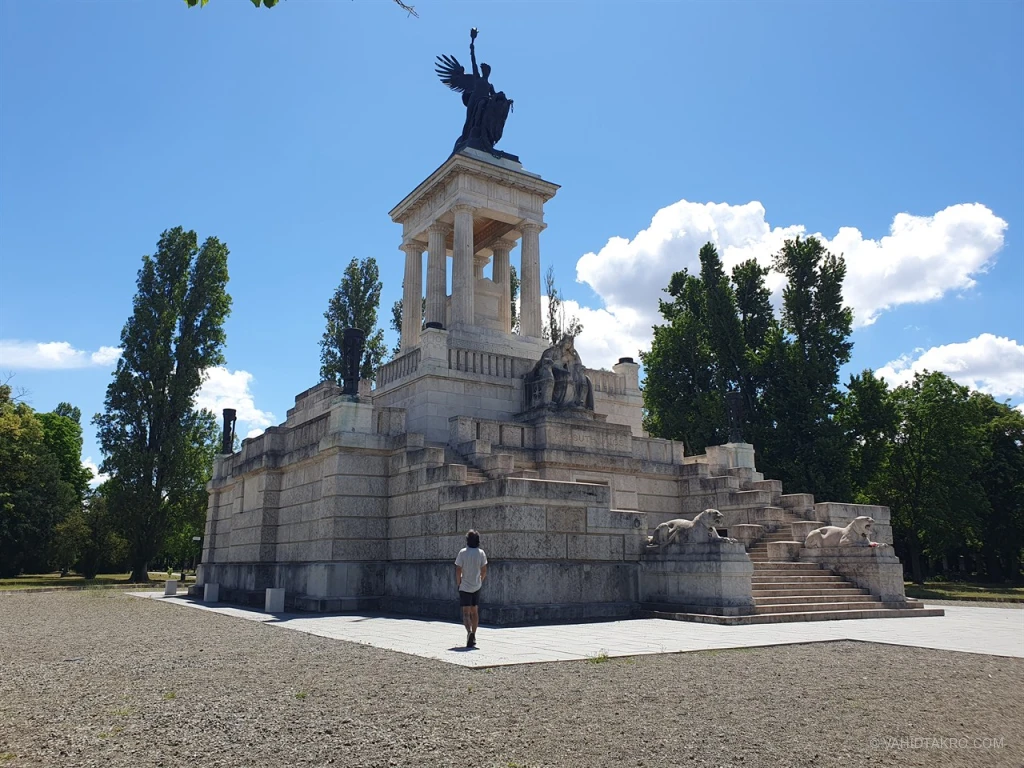
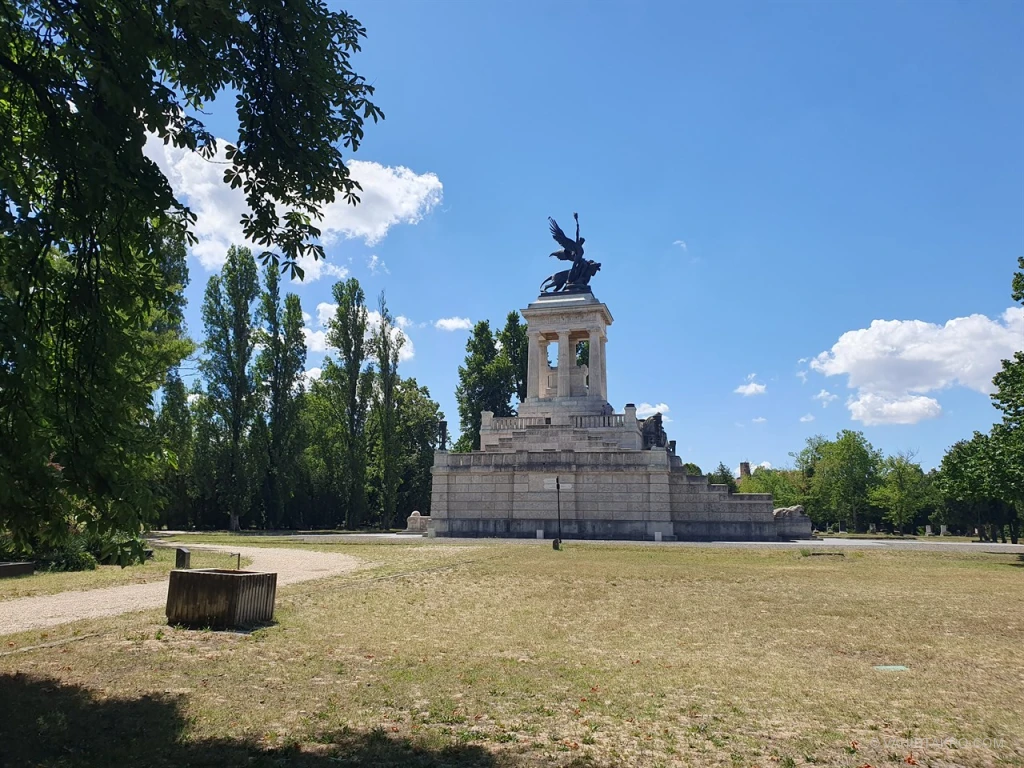
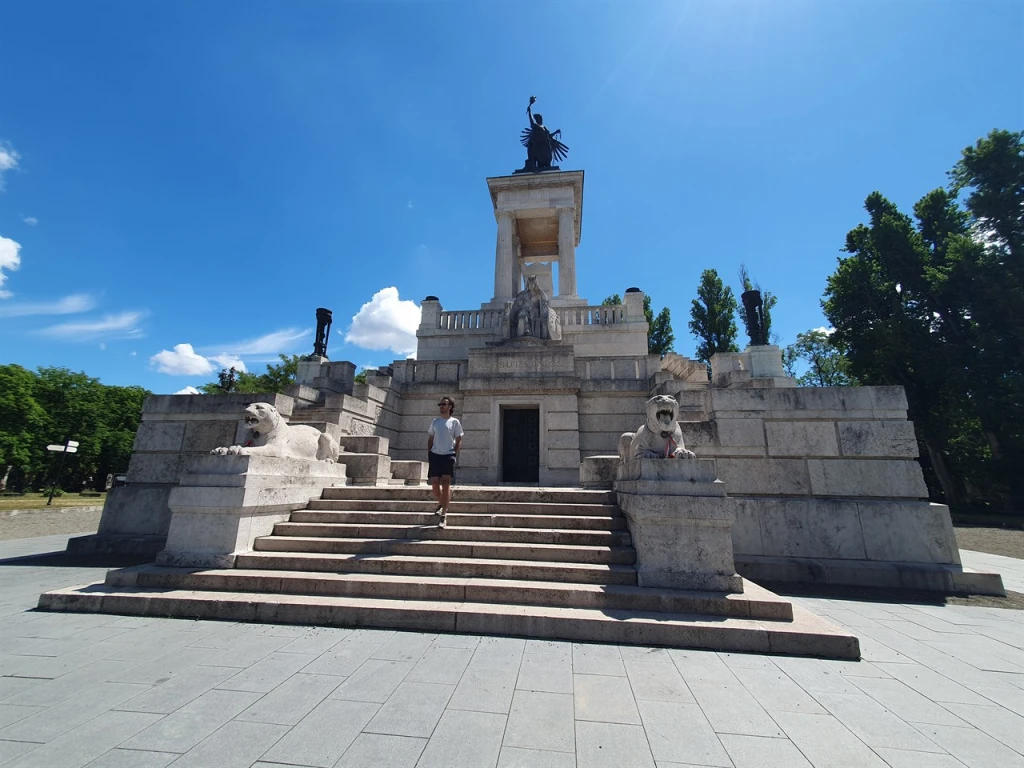
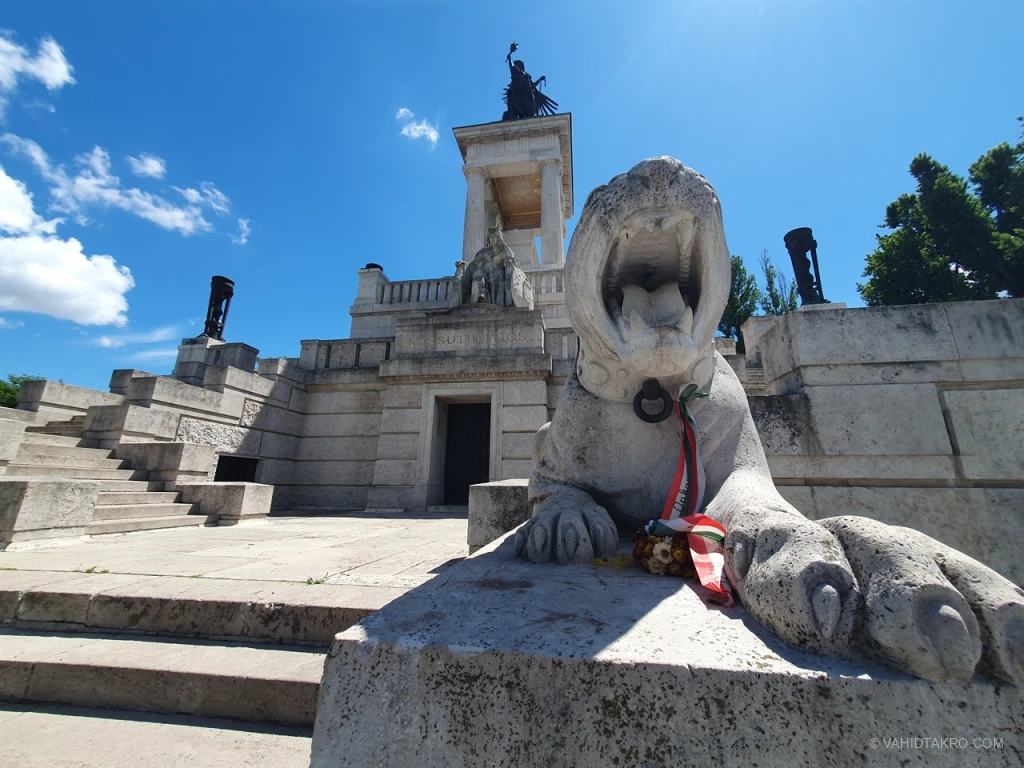
Kossuth was undoubtedly one of Hungary's greatest national heroes, serving as governor and leader of the 1848 revolution against the Austrian Empire and the Habsburg dynasty. Standing as an absolute symbol of the Hungarian struggle for freedom and independence, his tomb at Kerepesi is not only the largest monument in this cemetery but the largest mausoleum in the entire country of Hungary.
This colossal and magnificent mausoleum, which took years to construct, is adorned with extraordinary bronze statues. Standing before this massive monument, you fully comprehend how deeply this man was revered in the hearts of his country's people. His cries for justice in exile and his efforts to awaken the nation still seem audible in the silence surrounding this palatial monument.
Ferenc Deák
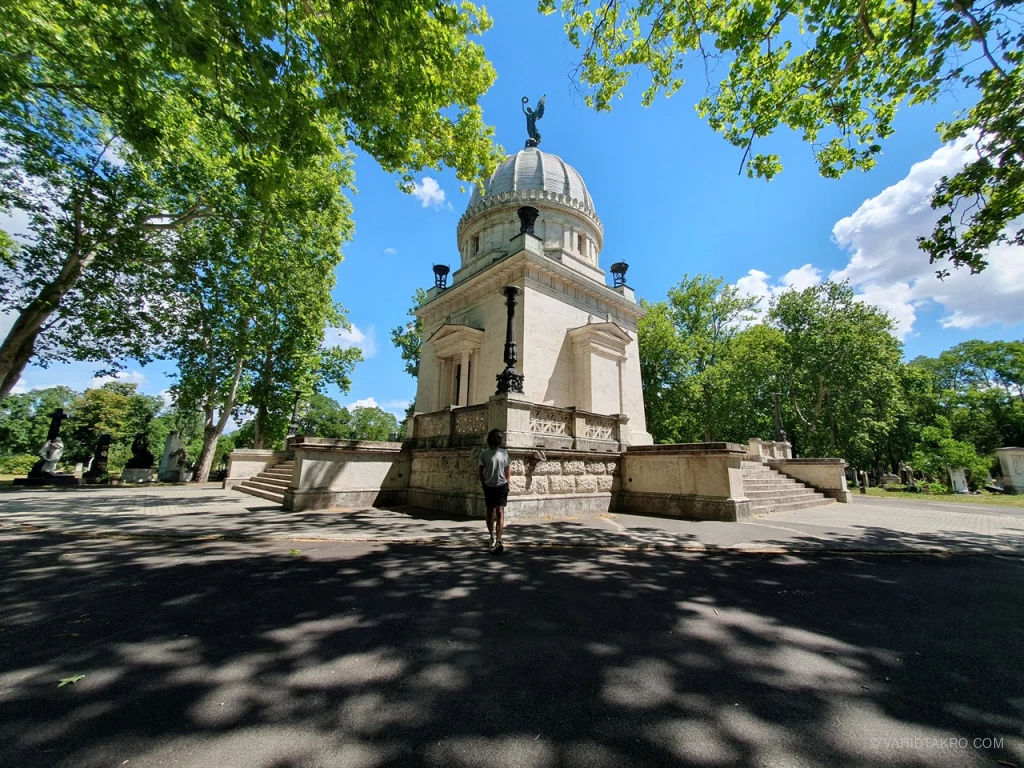
If Kossuth was a man of rebellion and epic lore, Deák was a man of politics and diplomacy. He is widely known as "The Wise Man of the Nation"; a statesman and minister who, with immense intellect, played a pivotal role in orchestrating the Compromise of 1867 and establishing the dual Austro-Hungarian Empire.
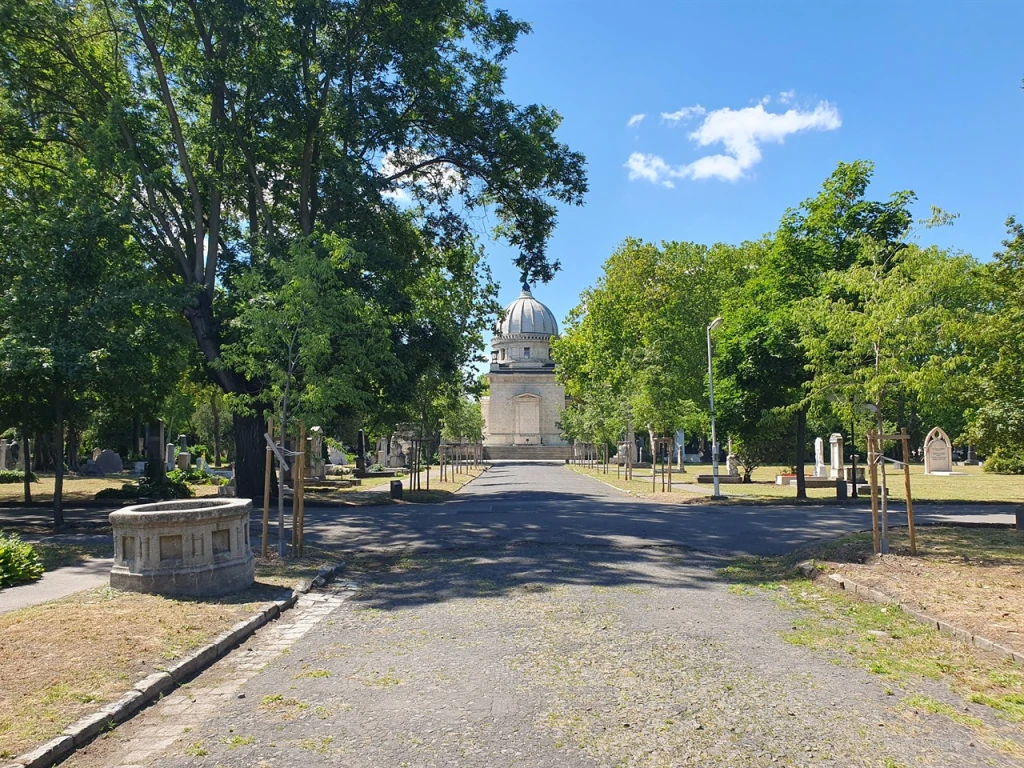
His tomb at Kerepesi is a domed architectural masterpiece, beautifully adorned inside with stunning mosaics and artistic murals. The contrast between his eternal peace in this grand space and the monumental, strategic decisions he made for the fate and future of millions of people engages the mind of every visitor. Deák was the one who restored Hungary's standing in Europe without bloodshed.
Lajos Batthyány
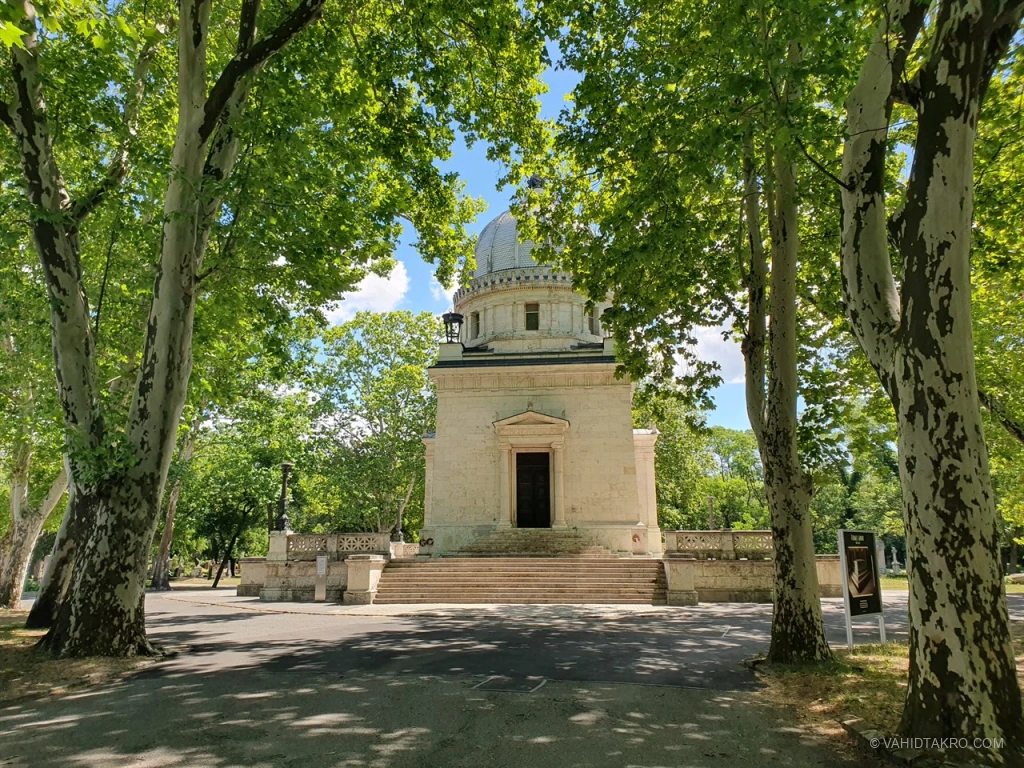
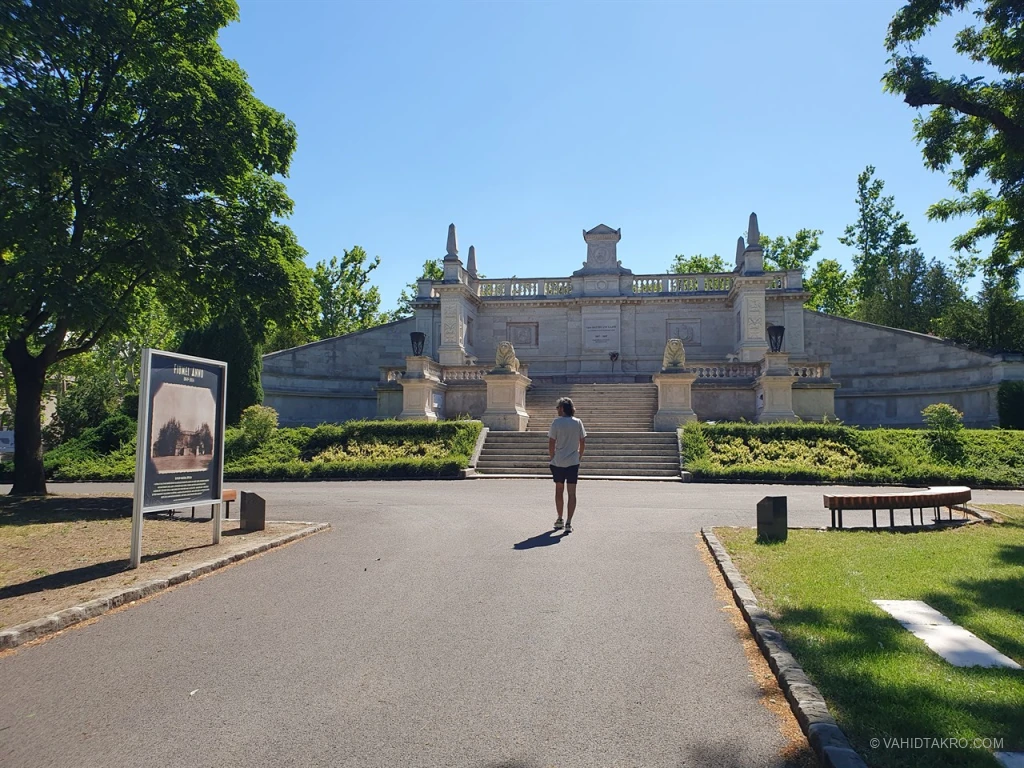
A short distance away from Deák and Kossuth, you reach the mausoleum of Count Lajos Batthyány, the first Prime Minister in Hungarian history. He was the man who took on the heavy responsibility of governing the country during the 1848 revolution, but following the revolution's defeat, he was arrested by the Austrian army and executed by firing squad in October 1849.
Batthyány sacrificed his life for his ideals, and his mausoleum at Kerepesi is a monument that instills a profound sense of respect in the viewer. This tomb serves as a reminder of the dark and bloody days Hungary endured to achieve independence, with Batthyány resting in the center of Kerepesi Cemetery as one of the first martyrs of this path.
Endre Ady
Stepping into the realm of literature, the name Endre Ady shines brightly. He was one of Hungary's most controversial, progressive, and influential poets of the 20th century. Ady brought about a massive, revolutionary shift in the country's traditional literature through his modern, symbolist, and daring poems about love, death, religion, and the homeland. His life was full of ups and downs, passionate love affairs, and a struggle with illness.
His gravestone in Kerepesi is very uniquely and artistically designed; the statue placed upon his grave perfectly reflects the rebellious, contemplative, and avant-garde spirit of this great poet. This is a gathering spot for those who adore modern literature, and reading one of his dark, beautiful poems next to his tomb creates a surreal atmosphere.
Unfortunately, I couldn't find the photo I took of his grave.
Attila József
Perhaps the saddest and yet most emotional spot in Kerepesi Cemetery is the resting place of Attila József. He was one of Hungary's most brilliant poets, whose life was remarkably bitter, poverty-stricken, lonely, and difficult. He suffered from mental illness and eventually ended his life at the age of 32 by throwing himself under the wheels of a freight train.
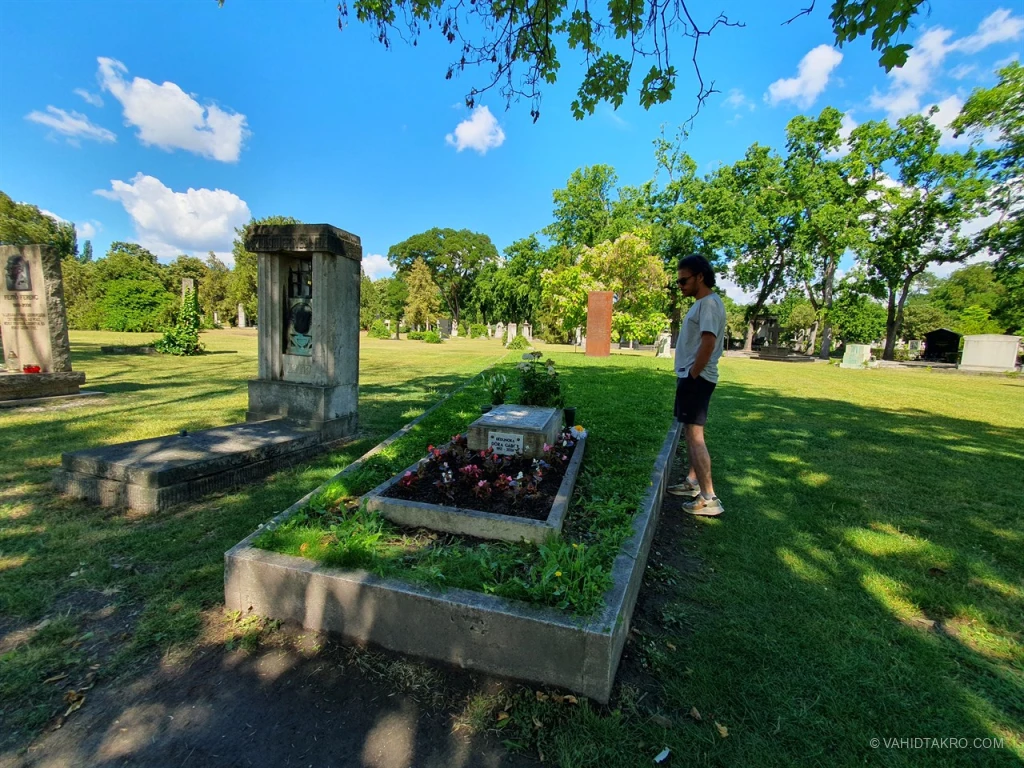
The poignant irony is that during his lifetime, he was never appreciated as he should have been and died in absolute poverty, but today he is recognized as one of Hungary's most beloved, noble, and national poets, and his poems are taught in schools. His tomb is relatively simple, but you can see fresh flowers, handwritten notes, or lit candles left by his admirers on his grave, showing how his poetry became immortal after his death; it appears to be his family grave, and the name of someone who recently passed away can also be seen on it.
A grand monument dedicated to him stands next to the Budapest Parliament, which I visited ten years ago:
Mór Jókai
For Hungarians, Jókai is what Charles Dickens or Victor Hugo is to their respective nations. This renowned 19th-century author, novelist, and playwright reconstructed Hungary's national identity through words with his magical pen and his epic, historical, and romantic stories. He enjoyed legendary popularity during his lifetime.
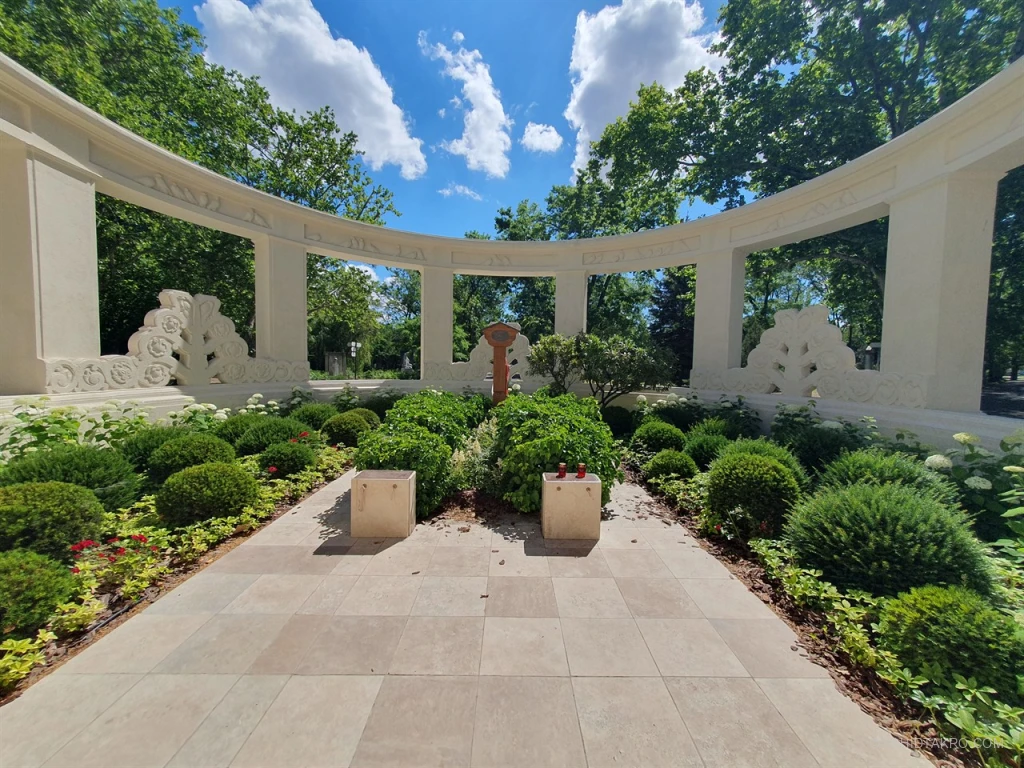
The tomb of Mór Jókai in Kerepesi, with its circular and open design, has a thoroughly romantic, peaceful, and literary atmosphere; a setting that seems pulled straight out of one of his own engaging, adventurous, and emotionally rich stories.
Ferenc Erkel
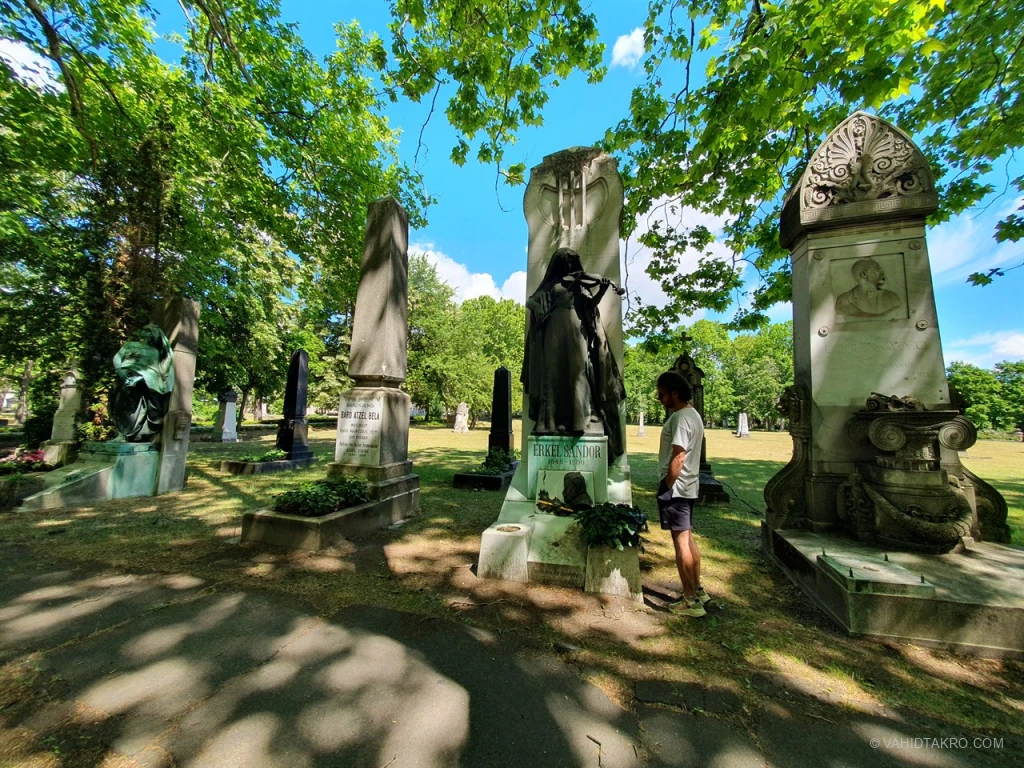
Now I am walking along the green pathways of Kerepesi and come across a monument that, for a music lover like me, feels like an eternal station. I read the name inscribed at the top of the gravestone: Ferenc Erkel. I cannot say he is one of my personal favorite composers, but he certainly could be for many.
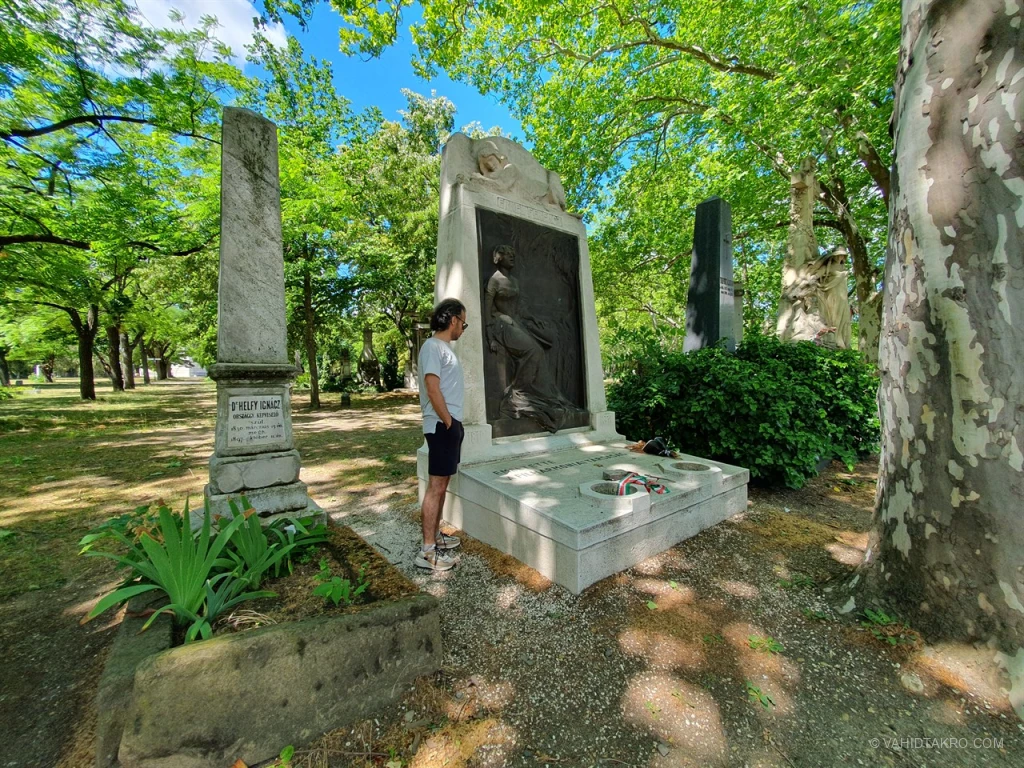
He is the father of Hungarian national opera and the composer of the country's stirring national anthem. Erkel was the one who intertwined traditional and folklore Hungarian melodies with classical European opera structures, granting a musical identity to a nation. On his grave, the phrase "EMLÉKÉRE A FILHARMÓNIA TÁRSASÁG" is visible, which means: "In his memory, from the Philharmonic Society". Erkel himself was the founder of the Budapest Philharmonic Orchestra, and this grave is a tribute from the orchestra to which he gave life. The bronze relief of a pensive woman on the stone looks as if, in the eternal silence of the cemetery, she is still listening to one of his timeless operas.
Sándor Erkel
Right next to the magnificent monument of the father lies the grave of his son, "Sándor Erkel." Standing before Sándor brings a unique feeling; a stunning and sorrowful statue of a woman holding a violin catches the eye atop his grave. Sándor followed in his father Ferenc's footsteps, becoming a prominent conductor, opera director, and composer in his own right. He conducted the Budapest Philharmonic Orchestra for many years. Watching this beautiful stone statue holding a violin creates a wonderful harmony with the surrounding trees and shadows, serving as a reminder of the timeless melodies this family gifted to the history of art.
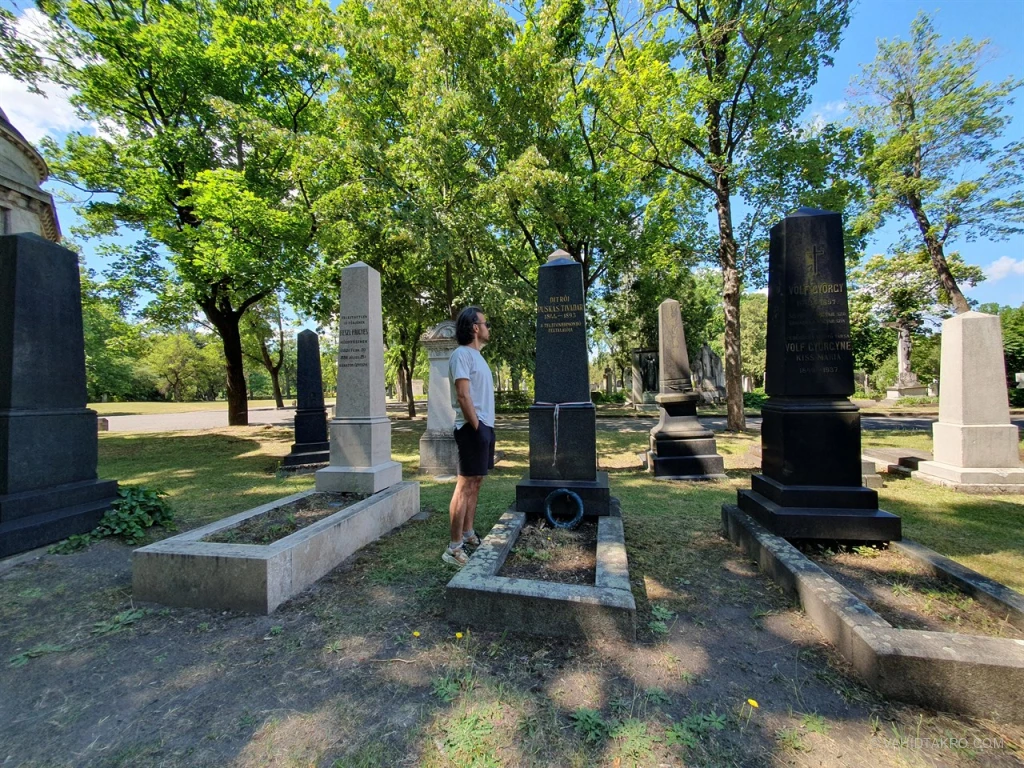
Tivadar Puskás
Amidst the stone, vertical columns, I stand before a man to whom the world of communication owes its brilliant concept: Tivadar Puskás. On his memorial stone, it is written in Hungarian: "A TELEFONHÍRMONDÓ FELTALÁLÓJA" (The inventor of the Telefonhírmondó, or the Telephone Newspaper).
Puskás was a genius Hungarian engineer and inventor who worked alongside Thomas Edison. He was the one who proposed the idea of a "Telephone Exchange" to Edison. More interestingly, it is said that the famous word "Hello" that we use when picking up the phone is derived from the Hungarian word "Hallom" (meaning "I hear you"), which Puskás excitedly repeated into the device while testing the world's first telephone line! He later launched the "Telephone Newspaper" in Budapest, which is considered the ancestor of modern radio.
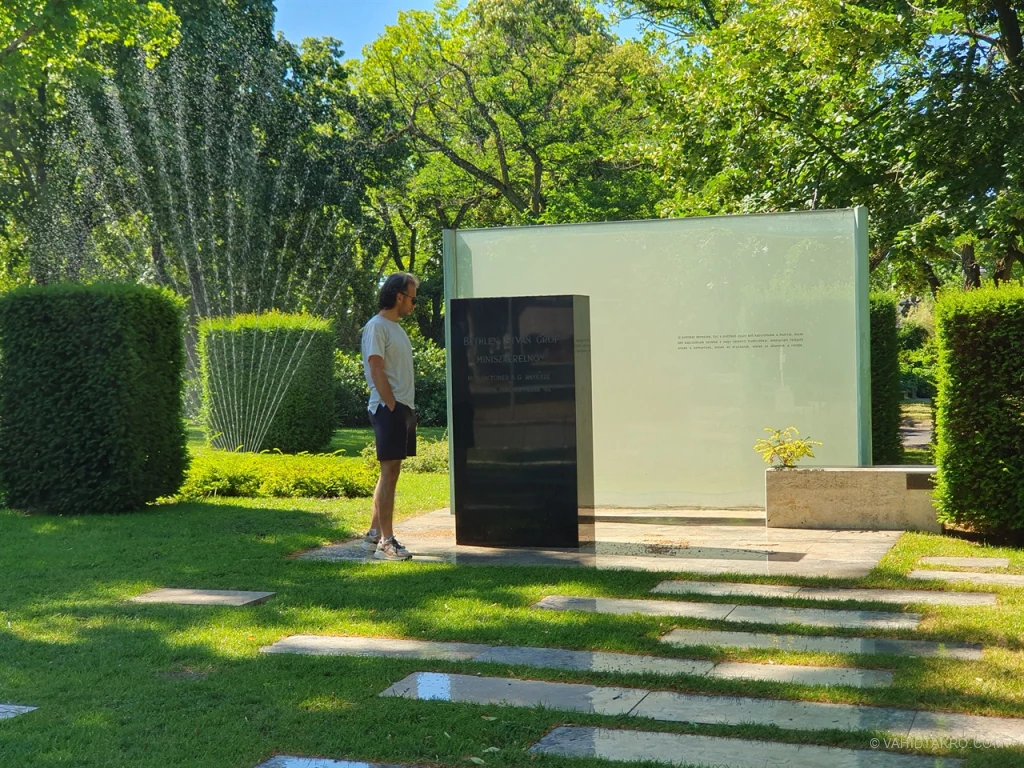
István Bethlen
Here the atmosphere becomes completely modern and distinct; a cube of black granite stone in a peaceful space with frosted glass behind it. This is the tomb of Count István Bethlen, the man who served as Prime Minister during one of the most difficult eras in Hungarian history (from 1921 to 1931).
Following the collapse of the Austro-Hungarian Empire and World War I, he took charge of a crisis-ridden country and managed to stabilize Hungary's economy and politics. With the onset of World War II, he opposed his country's alliance with Nazi Germany, and eventually, after the arrival of the Red Army, he was arrested by the Soviets, sent to Moscow, and passed away in loneliness and captivity. Years later, his ashes were brought back to this spot in Kerepesi so that this modern grave could serve as a reminder of his bitter and statesmanlike destiny.
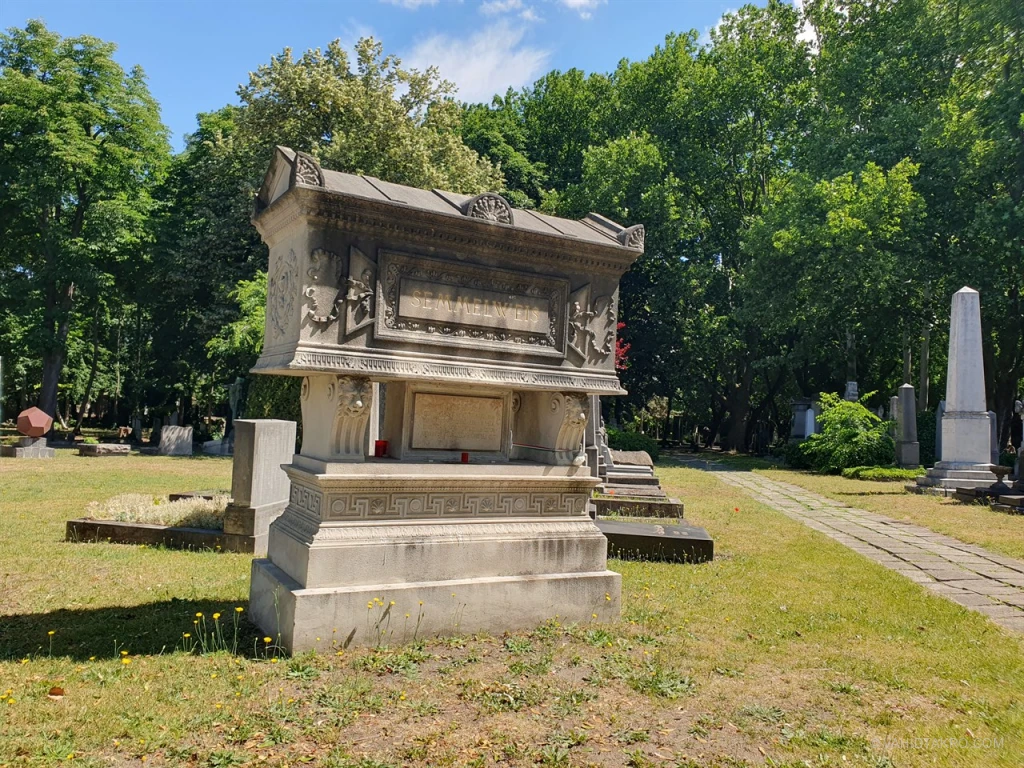
Ignaz Semmelweis
A bit further away stands a highly imposing stone monument that resembles a large ancient sarcophagus resting on pillars. A prominent name is engraved upon it: Semmelweis.
Ignaz Semmelweis was a genius physician who is recognized today by the title "The Savior of Mothers." In the 19th century, many women died of severe fever after childbirth. Semmelweis discovered that if doctors simply washed their hands with a chlorine solution before delivery, maternal mortality dropped close to zero! However, the tragedy of his life was that the medical community of that time mocked his claim and rejected it. He ultimately passed away in a mental asylum, lonely and due to an infection. Years after his death, the world realized what a great genius he was. Viewing this magnificent tomb revives a sense of belated historical gratitude.
Mihály Babits
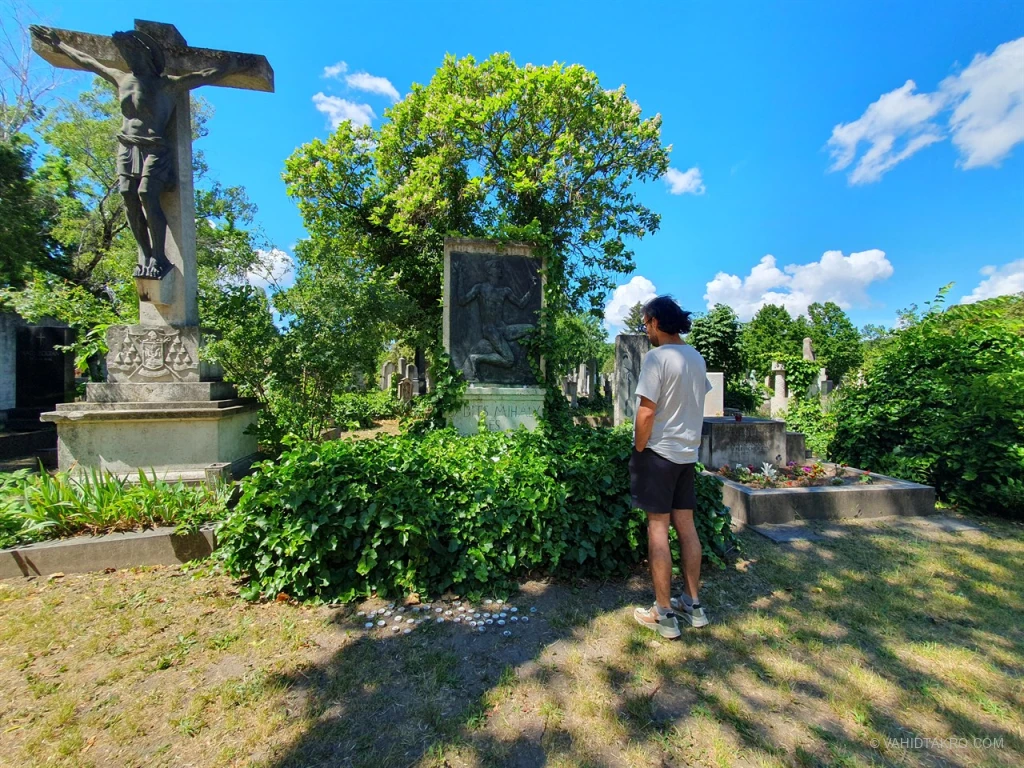
Here, a prominent relief of a human figure can be seen on stone, gracefully surrounded by green climbing plants; this is where Mihály Babits, a great 20th-century Hungarian poet, writer, and translator, rests.
Babits was one of the main pillars of the famous literary magazine "Nyugat" and, with his astounding mastery of language and literature, translated works like Dante's "Divine Comedy" into Hungarian in the most beautiful manner. His grave is a fusion of bronze art, stone, and green nature; much like his poems, which were a combination of the depth of human thought and the world's beauty. Standing here and watching this abundance of art immersed in nature's silence reminds me once again of the feeling of a faltering pen that I experienced in Père Lachaise; what can one say in the presence of these greats?
Tivadar Csontváry Kosztka
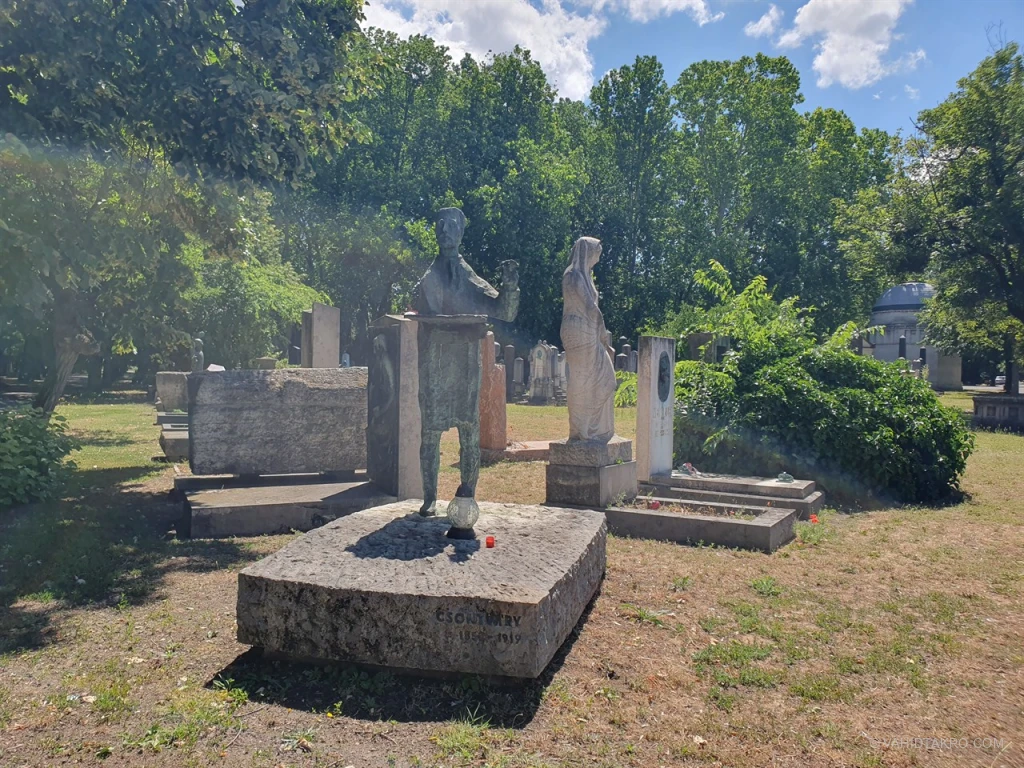
Here, however, you encounter one of Kerepesi's most unique and avant-garde graves; a bronze statue of a man in a coat who has placed his foot on the stone edge of the tomb, staring into the distance with a piercing gaze. His name is engraved on the stone base: Csontváry.
Csontváry was one of the most brilliant, eccentric, and unique painters in Hungarian history. He was initially a pharmacist, but at the age of 27, he claimed that a mystical, inspiring heavenly voice told him he must become the greatest sun-worshipping painter in the world, even greater than Raphael! He possessed his own unique style, which was a blend of expressionism and surrealism. His monumental tragedy was that during his lifetime, the artistic community deemed him a lunatic and madman, failing to take his work seriously—to the point that he passed away in absolute poverty and starvation. After his death, when people wanted to sell his canvas paintings as torn canvas to coachmen, a young architect bought them, and only then did the world realize what an irreplaceable genius it had lost! Picasso, after seeing Csontváry's works, noted: "I did not know there was another great painter in this century besides me."
Áldásy Family Tomb
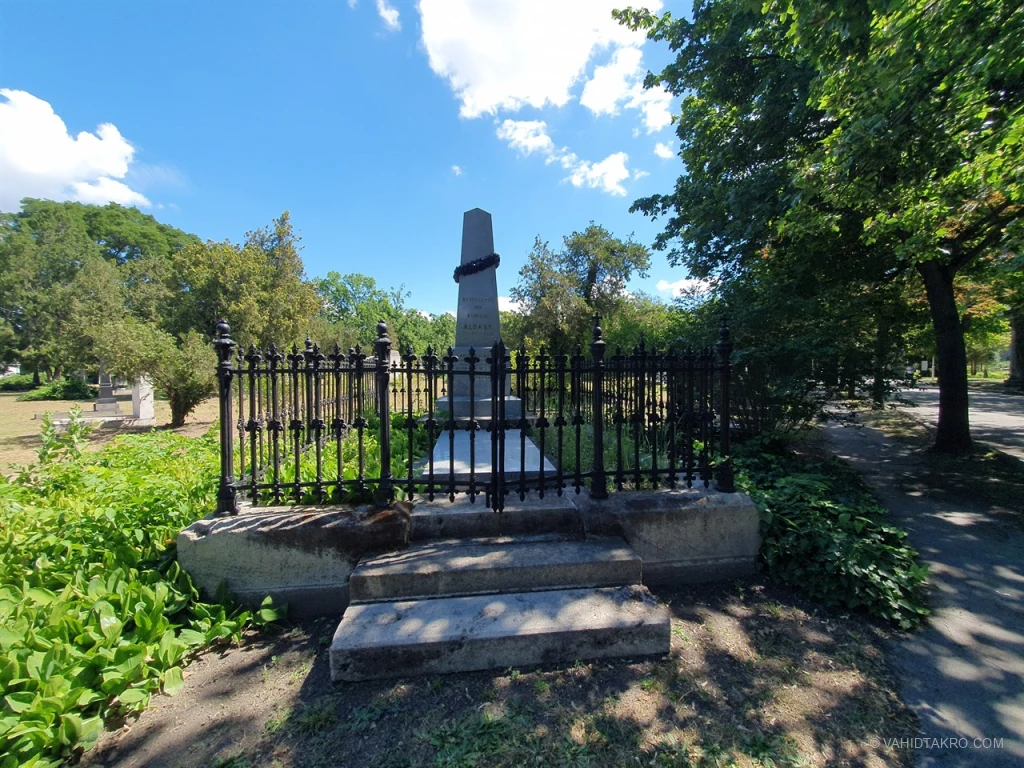
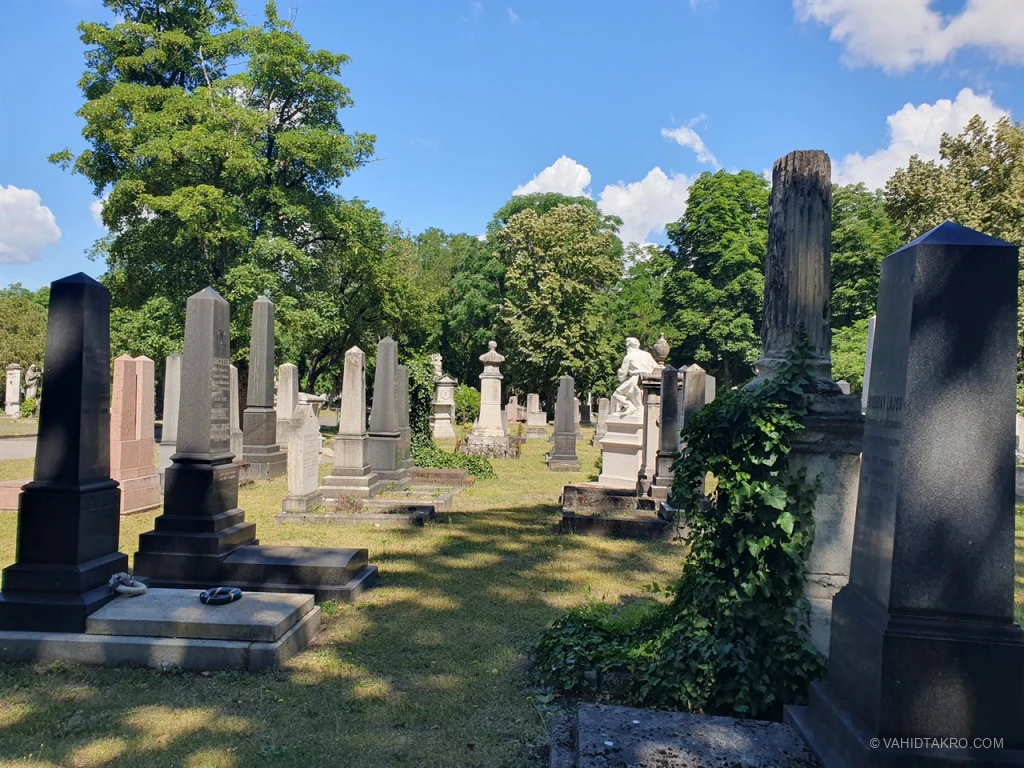
A bit further away you can see a tall obelisk (a pyramidal stone pillar) surrounded by a heavy, black iron fence. On the gravestone, the phrase "A REFORMÁTOR ÁLDÁSY CSALÁD" or the name of the Áldásy family is visible.
This grave belongs to the prominent and aristocratic Áldásy family, who were influential figures of the 19th century. The wrought-iron fences and the untouched space around it beautifully capture the authentic, unaltered ambiance of the mid-19th century and the Hungarian national renaissance period.
The Freedom Manifesto Monument: Mihály Táncsics
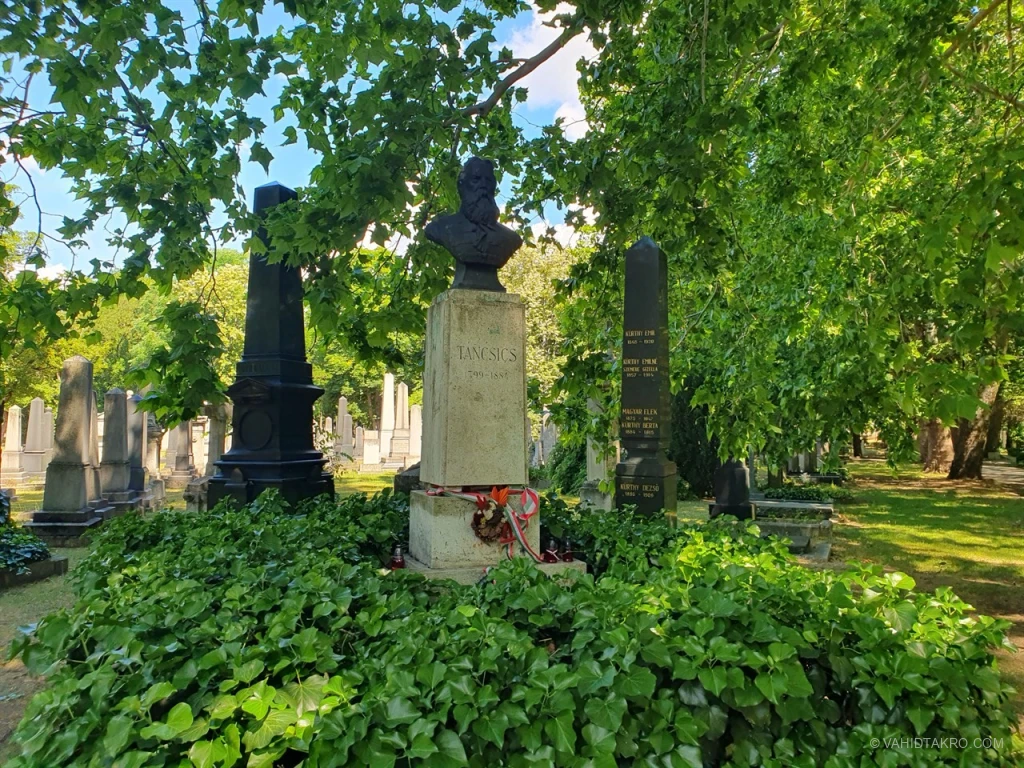
Here you encounter the bust of a man with a long beard, with the name TÁNCSICS engraved on its stone base.
Mihály Táncsics was one of the most pivotal and revolutionary figures in Hungarian history, and a spiritual leader of the 1848 revolution. A radical writer and journalist, he was imprisoned multiple times by the Habsburg government for defending peasants' rights and freedom of speech. It is fascinating to know that on March 15, 1848, the revolutionary people of Budapest rushed toward his prison, freed him, and carried him through the city on their shoulders as a sign of victory. Today, his tomb is constantly honored by people with the tricolor ribbons of the Hungarian flag.
József Szterényi
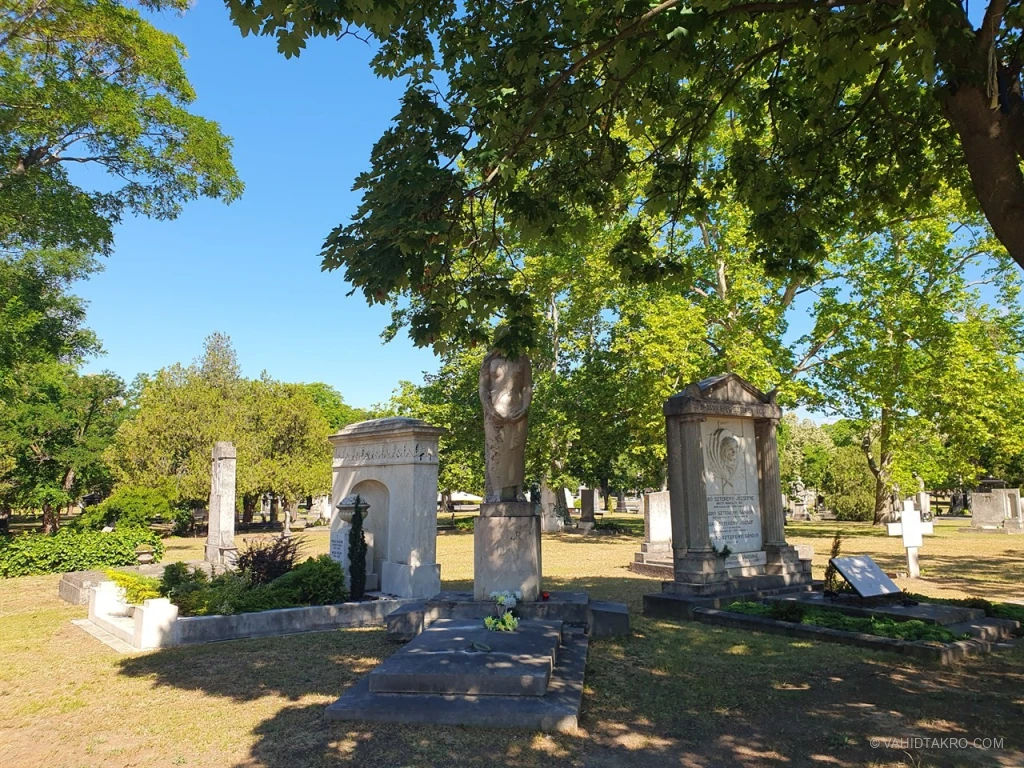
On the right side of the image stands a luxurious monument in classical architectural style, featuring a circular angelic relief, with the name of the SZTERÉNYI family engraved upon it.
Baron József Szterényi was a prominent politician and economic expert in Hungary during the late 19th and early 20th centuries (the Austro-Hungarian Empire era), who also served as the country's Minister of Commerce for a period. He played a very important role in the industrialization of Hungary and the development of the railway network and Budapest's modern infrastructure. This magnificent stone tomb serves as a reminder of Hungary's golden era of development and modernization.
The Grave of András Bajor
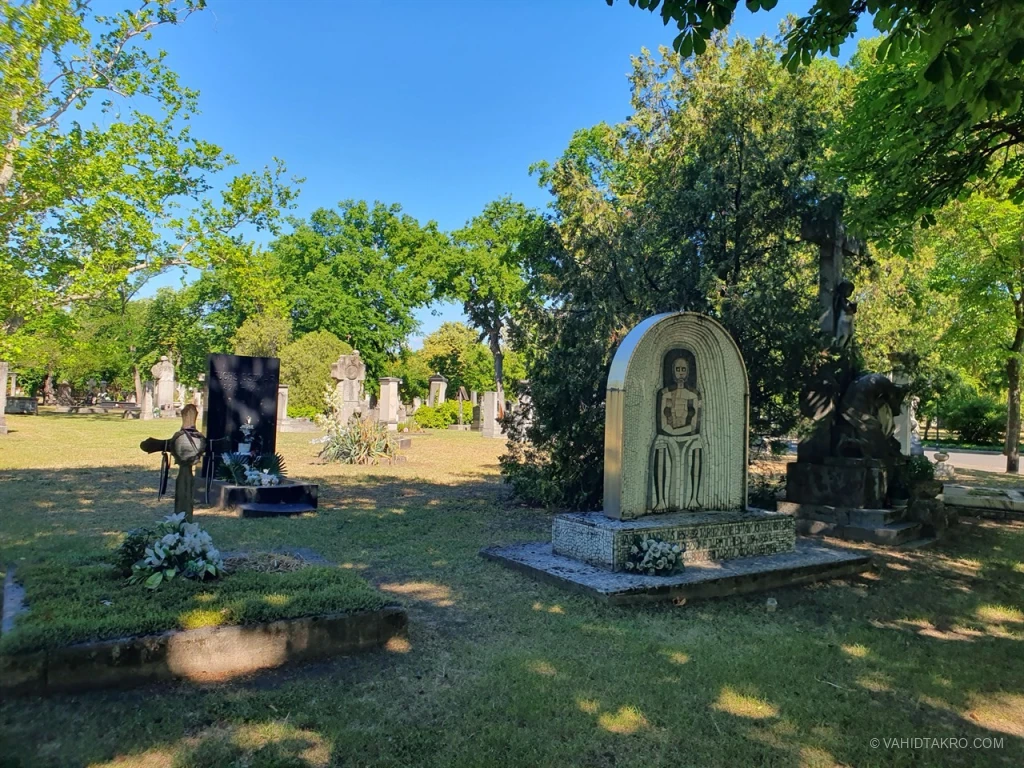
One of the most unusual and avant-garde gravestones in this cemetery is located here; a domed arch with tiny tiling (mosaic) depicting the minimalist and primitive figure of a human being, which belongs to András Bajor.
This unique piece of art stands in sharp contrast to the conventional structures and angel statues in the cemetery. The modern and somewhat expressionistic style of this monument catches the attention of any photographer and art enthusiast in Kerepesi, showing that this cemetery is a living art museum of the evolution of Hungarian art.
János Arany
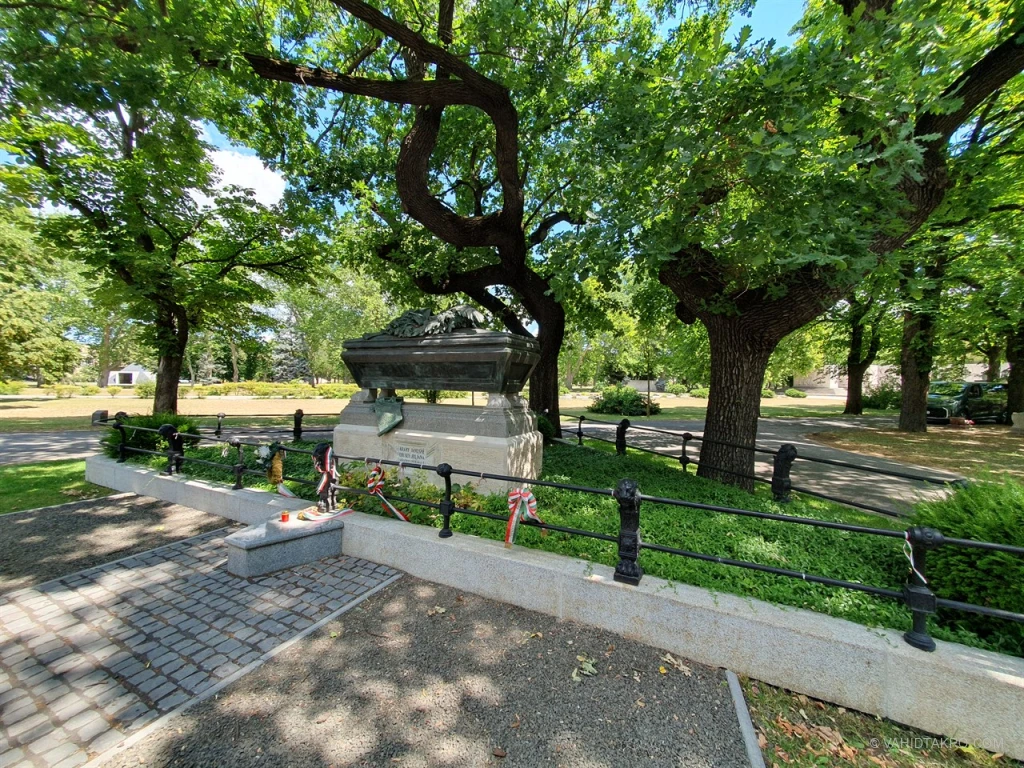
Near the cemetery entrance, we reach the architectural masterpiece and monument of this graveyard; a bronze and stone sarcophagus nestled in the embrace of robust trees, belonging to Hungary's great and renowned epic poet, János Arany.
Also known as the "Shakespeare of Hungary," he kept the national spirit of Hungarians alive with his epic poems. If you look closely at the top of the tombstone, you can see bronze details of oak tree leaves and branches; oak is a symbol of steadfastness and authenticity in Hungarian literature, symbolically placed on this great poet's grave. On the lower inscription of the monument, the name of his wife, Julianna, is also engraved alongside his, making this magnificent tomb a narrator of an eternal romantic and national story beneath the shade of Kerepesi's trees.
Memorial Fountain Pavilion
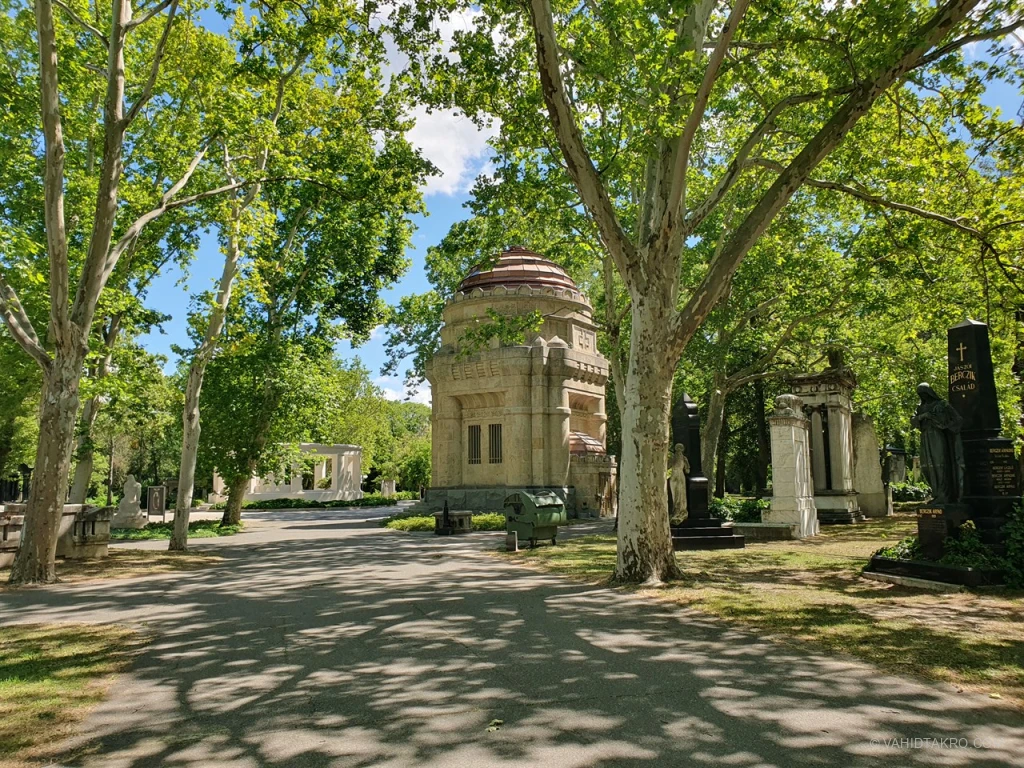
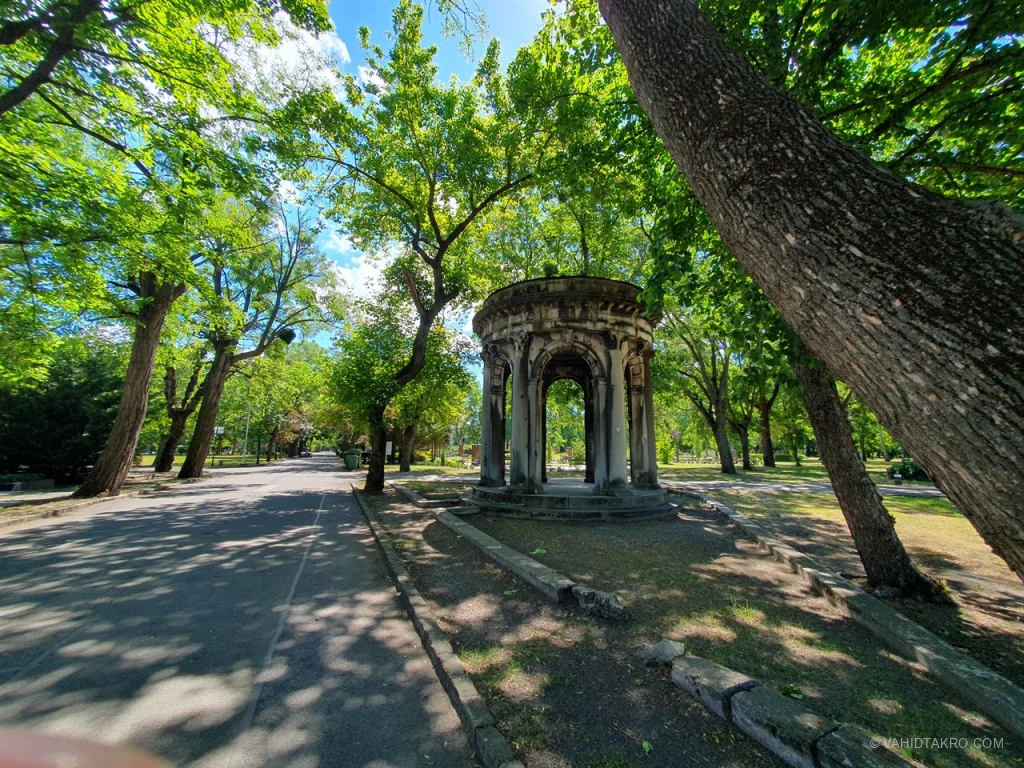
Here is a small ancient architectural masterpiece on the edge of the cemetery's main road; a rotunda or circular pavilion with classical-style columns engulfed in the shadow of robust trees.
This structure is a romantic refuge and a historic monument built as a memorial or memorial fountain among the old sections of Kerepesi. Walking alongside these worn stone columns, on whose bodies the passage of time has left its mark, brings the exact same feeling one gets in Père Lachaise in Paris; a deep bond between architecture, silence, and eternity.
Mass Grave and Memorial of the 1956 Revolution
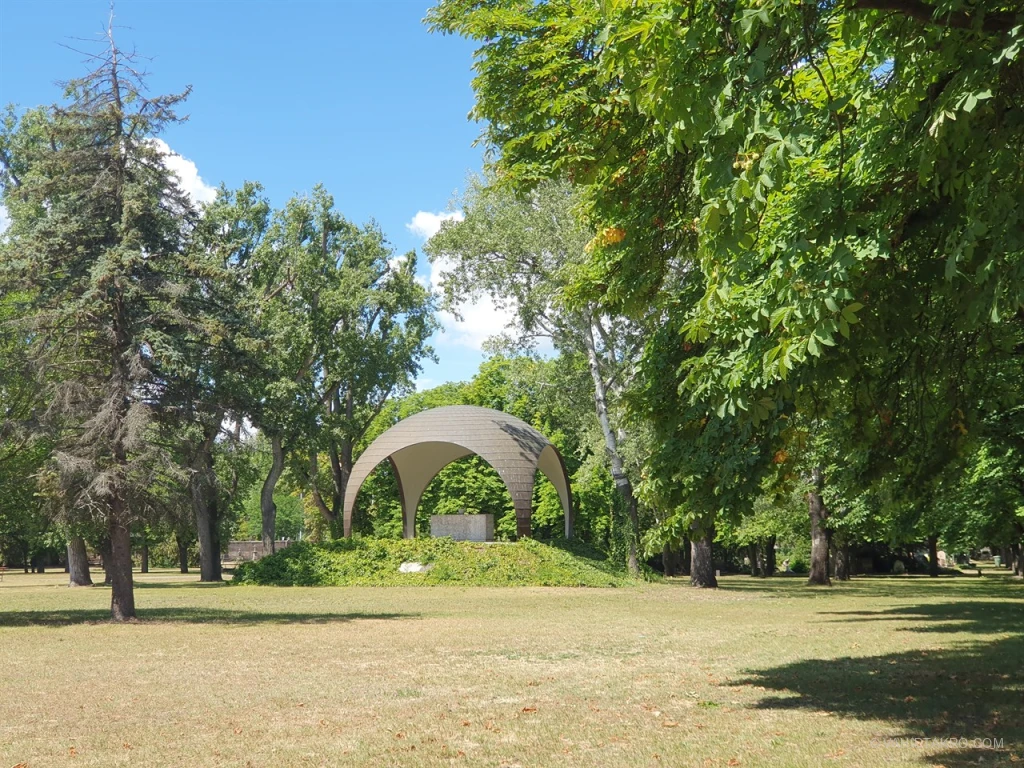
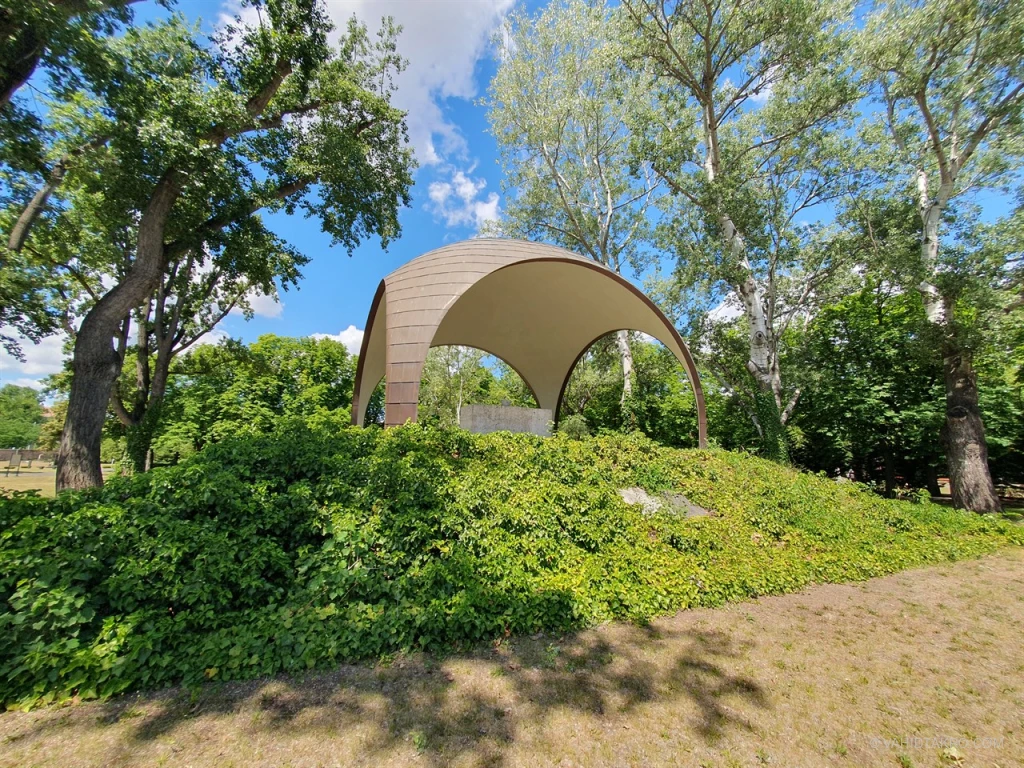
We arrive at one of the most unique sections of Kerepesi; a modern, domed, and hollow concrete structure casting a shadow over a lush green hill. This monument is part of the memorial section and mass grave of the victims and fighters of the 1956 Hungarian Revolution against Soviet communist rule.
In this section of the cemetery, hundreds of those who lost their lives on the path to freedom during the bloody street clashes of Budapest rest together. The simplicity, grandeur, and open space of this domed monument bring a sense of flight, liberation, and at the same time, deep sorrow for the young people whose blood built the foundations of modern Hungary. This section stands in sharp contrast to the 19th-century tombs, serving as a reminder that Kerepesi is the beating heart of this country's contemporary history.
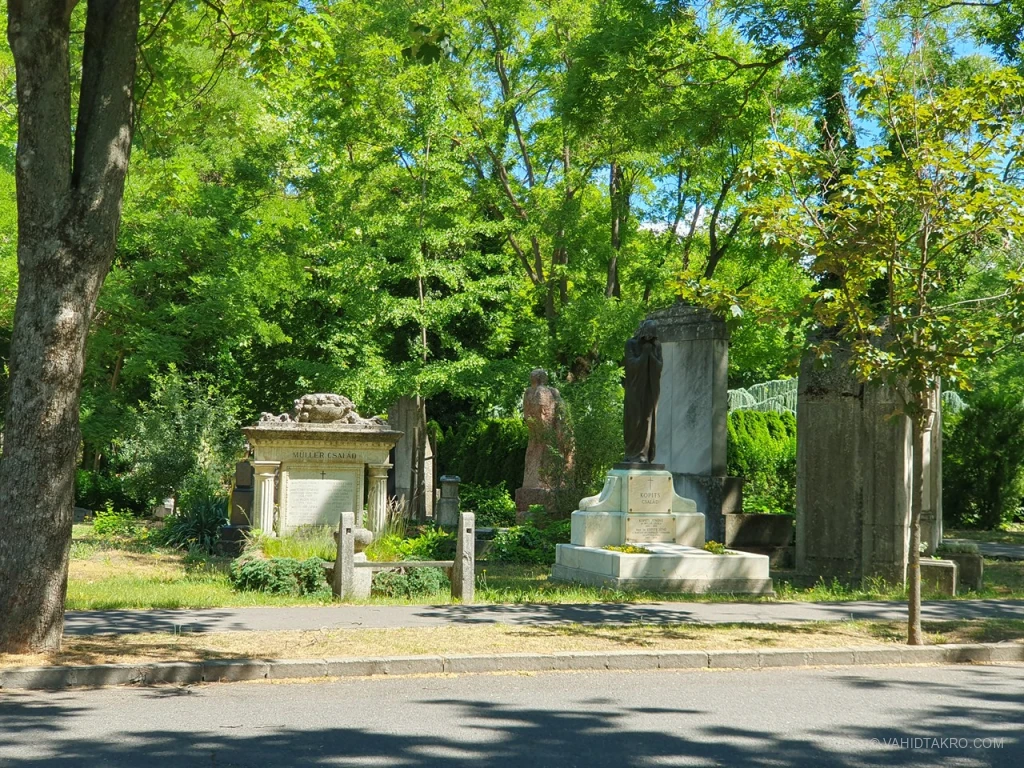
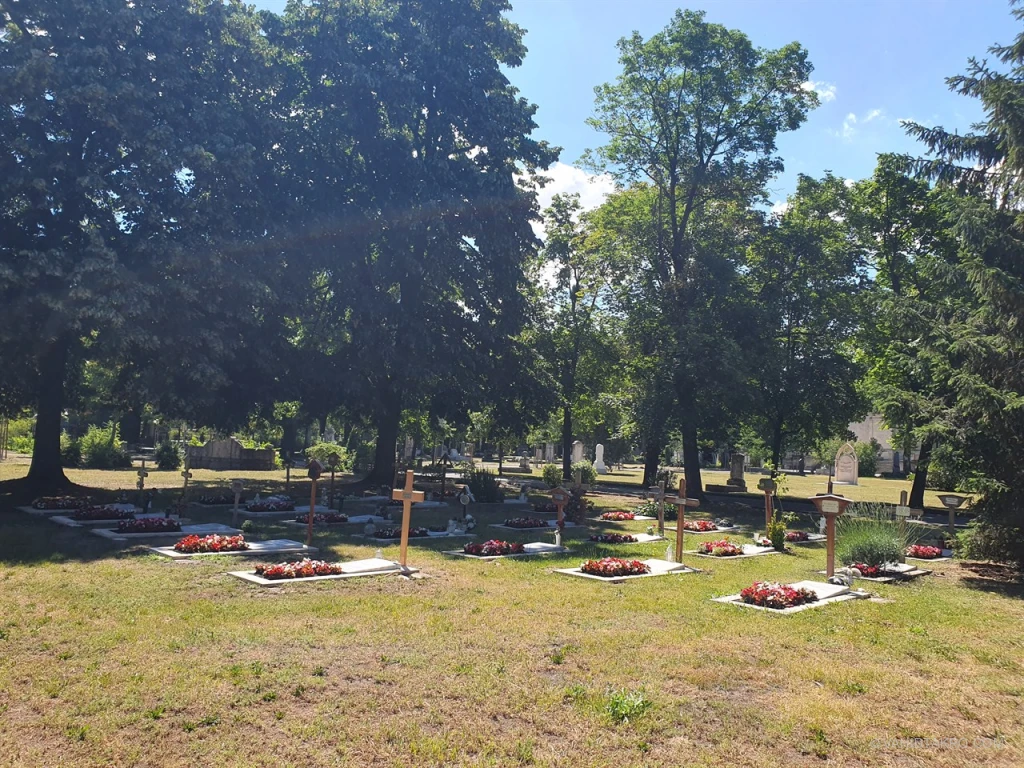
Kerepesi Cemetery is not just a burial ground; it is an art gallery of national renaissance-era sculpture, a living book, and a peaceful sanctuary right in the middle of Budapest.
You can also read my piece on the Père Lachaise Cemetery in Paris in this section:


Load Comments