Although six years have passed since the first day I set foot in the Netherlands, I have decided to write about it as if it were still that first day. When the name Netherlands comes to mind, one inevitably thinks of the land of flowers and freedom, calm canals, beer, waffles, fragrant cheeses, and warm smiles.
The Dutch are among the most amazing and unique people in Europe; in history, hardworking and steadfast, in speech, frank and straightforward, and in behavior, kind and friendly; they are also among the greatest colonizers in the world. It is this combination of traits that makes traveling to the Netherlands interesting and important. The idea that they pulled this land out of the water and reclaimed it is astonishing!
Tehran to Amsterdam
I left Tehran on an Iran Air flight bound for Amsterdam; a direct, comfortable, and stress-free journey. The pilot was professional and calm. Amsterdam Airport is bustling, connecting the world, and KLM follows the open and friendly culture of the Netherlands. Overall, it seems this country shows a warm face to everyone and loves to be open, giving and receiving love. Flowers don’t bloom in the Netherlands without reason.
Upon entering this beautiful land from Schiphol Airport, our journey in the Netherlands officially began. Shortly after, my brother joined me from Turkey, and together we headed to the train station toward the city where Martin, our Dutch friend, was waiting for us.
Amsterdam Schiphol Airport
The Netherlands has an amazing public transportation system; a well-organized network connecting everything, clean, precise, and flawless. Payment methods vary, but the best option is using credit cards like Visa or Mastercard to purchase public transport tickets.
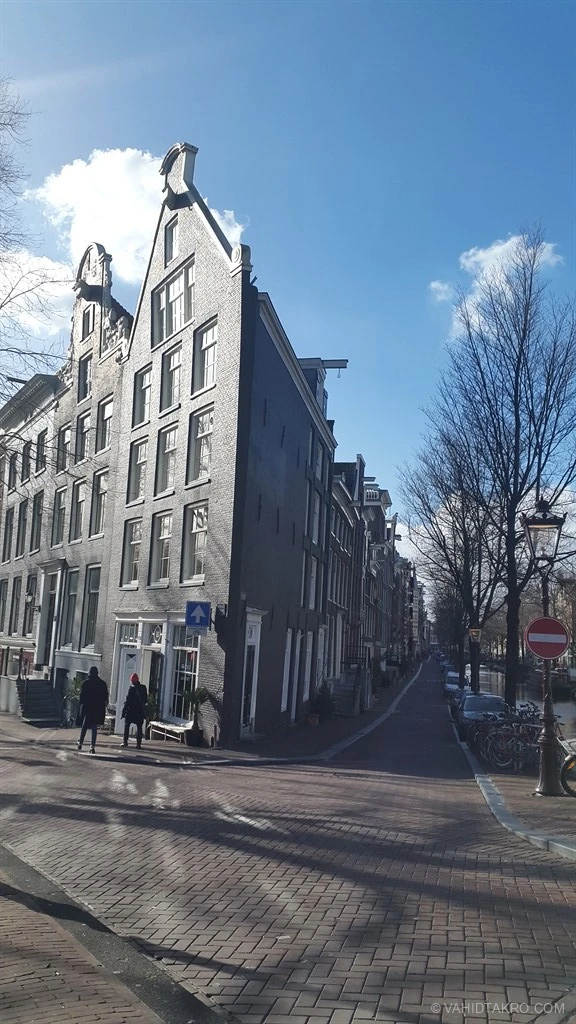
Heineken and Amstel advertisements, cobblestone streets, brick houses, the peaceful coexistence of birds in the city, countless canals, and another expression of freedom immediately capture your attention when you first encounter Amsterdam. You can easily sense that this city says: Life is short, enjoy it. Amsterdam lives as if in the style of Shiraz.
On that rainy day, we arrived at Martin’s house; a narrow apartment with authentic Dutch architecture. Martin, a kind-hearted young man, welcomed us with a can of Heineken. That day, another guest was at the house: Louis from Brazil. This was our first meeting with him.
We slept and woke up the next morning to the sound of a ukulele, that small guitar. Louis was playing in the kitchen, and the day began quietly and musically.
The day began. I love days when the weather is both cloudy and sunny; days when clouds are light, neither heavy nor threatening, and the sky resembles a soft, white embrace rather than a dark curtain. Through these clouds, sunlight occasionally finds its way, not harshly but gently, settling softly on the ground. A light that does not burn, does not shout, it simply exists.
It feels as if the sun calls from behind the clouds: Don’t worry, even if you can’t see me fully, I am still here. This weather reminds me of a calm hope; not a noisy hope, but a silent assurance that, in the quiet of light and clouds, makes the heart a little lighter. The ground is wet yet does not dry, and I love traveling on such days. Today is one of those days.
My eyes suddenly catch the reflection of tree branches on the blue water collected in the cobblestone depressions; a simple image that takes my mind back to distant years, to the time when this land was pulled from the water, dried, and turned into the Netherlands.
Perhaps many of those living here do not like such weather. The sky is too bright and the ground dark; when you look at the sky, everything fades in silhouette, but when you lower your gaze, colors come alive and reveal themselves directly. Trees, shadows, and the peaceful human connection with nature are admirable in this land.
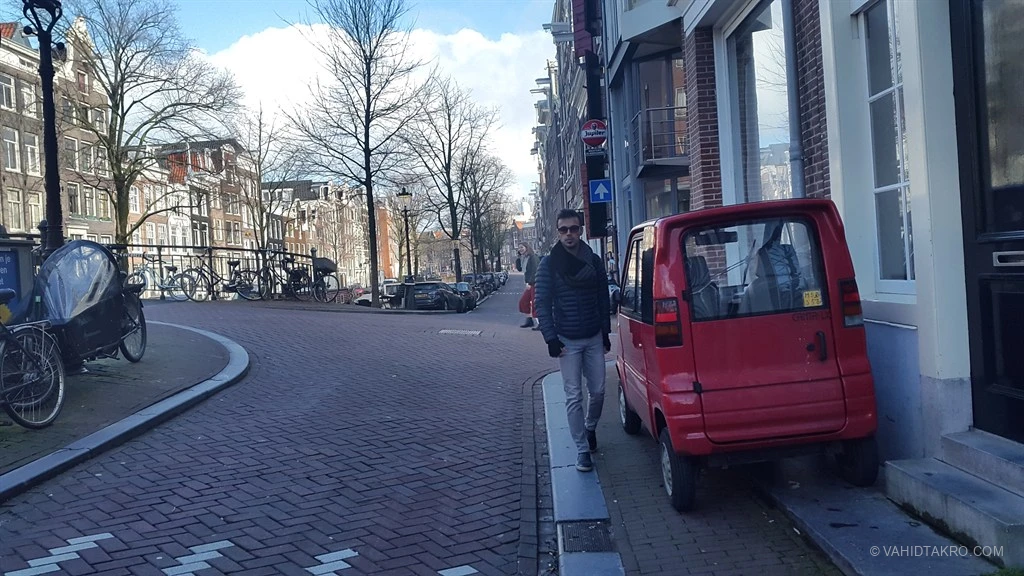
Symbolic windmills, flower shops, cheese shop windows, and the small Canta car inevitably catch my attention; simple details that complete the story of everyday life.
Canta is a very small two-seater car made in the Netherlands, designed in 1995 for people with disabilities, though its use is not limited to this group. Due to its narrow width (about 1.10 meters), it is recognized as a mobility aid in the Netherlands and can travel on bicycle paths and even sidewalks without a driving license. The car is fully customizable and even has a model where the user can drive while remaining in a wheelchair. Gasoline and electric versions of the Canta have been produced. I’ve heard it was invented because of Amsterdam’s narrow streets.
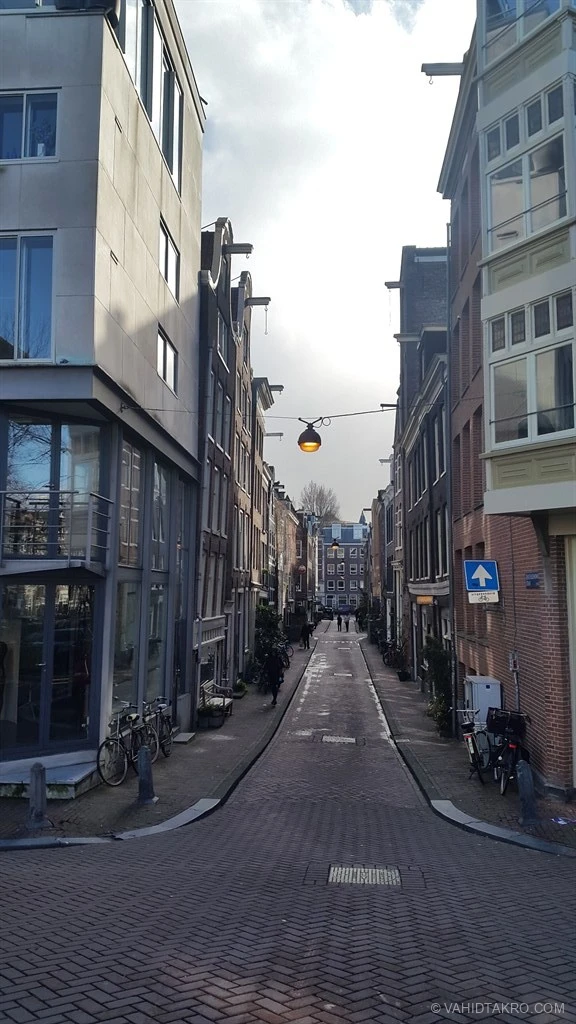
Amsterdam Streets
Here, pleasantries give way to frankness and reality. Amsterdam is a point on the globe where freedom takes on a new meaning; or perhaps the city itself gives meaning to freedom. My story with this land goes back years; a place where my interests and tastes are respected, a place where I have many friends with beliefs and perspectives close to my own; a developed country yet still faithful to its roots and traditions.
The roads and pathways are designed to respect pedestrians, cyclists, motorcyclists, boaters, and drivers simultaneously. This is a land where judgment is minimal and the last thing people live under. People here are straightforward, candid, and open. It is this honesty that fosters a sense of calm and brings life closer to its true meaning.
The Dutch have built their country so that life can truly happen in it, not the way architecture books or global standards tell them to. They built this place the way they wanted, based on real needs, shared decisions, and the lived experience of people who have learned for centuries how to live with land, water, and time. This is a true example of democracy.
This land was once partly under water, and with patience it was taken back from the sea. The Netherlands is the result of a historic decision: standing against nature not to defeat it, but to live alongside it. This past has shaped today’s Dutch way of life, a lifestyle that is not for show and not forced, but rooted in a deep understanding of life.
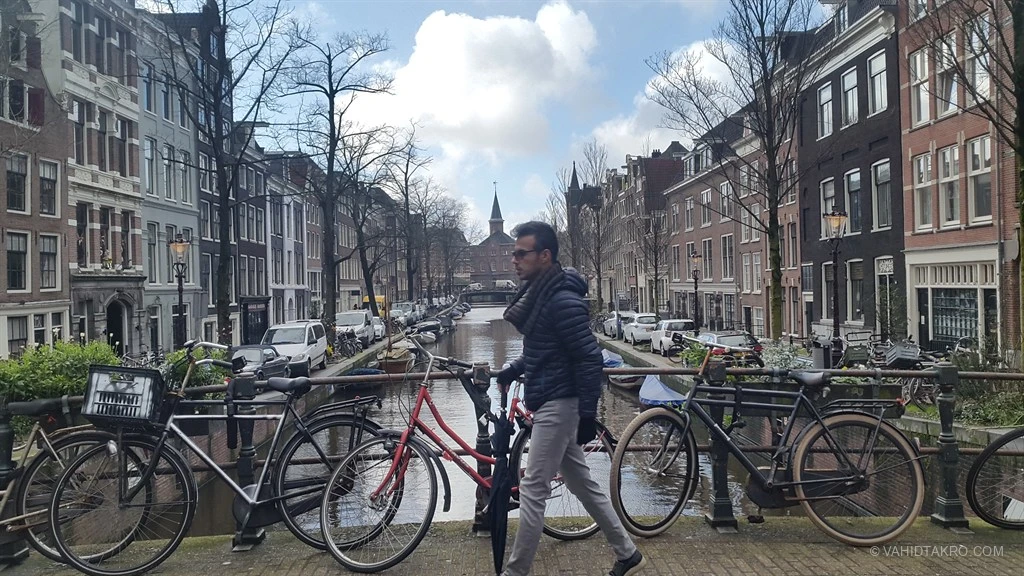
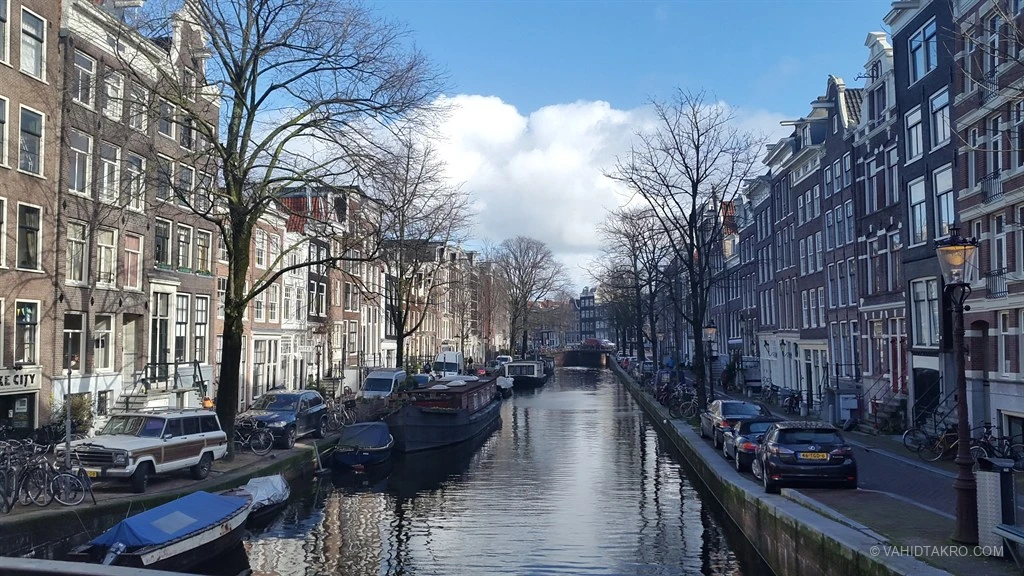
Amsterdam canals
Here, lifestyle reflects the spirit of the people. They have learned to build simply, live precisely, and find freedom in everyday details. It feels as if this land, quietly and without showing off, has reached the true meaning of life. The houses, their warm lights, and the candles lit at dinner take the city back to the time when Rembrandt lived here.
For every problem, instead of choosing flashy or short-term solutions, they have found sustainable answers, solutions that come from daily life. When the world still saw renewable energy as a dream, the Dutch used the power of the wind. Windmills were not just historical symbols, but signs of a smart relationship with nature: using it, not abusing it. They did not burn things to move forward.
For narrow streets, they designed small cars, not for speed, but to fit the space. And long before urban cycling became a global slogan, they made it part of everyday life. They pushed bicycle use to the highest level and built paths for it across the whole country, safe, continuous, and respected, so that the bicycle is not an alternative, but the main way of getting around.
Canta, a tiny, Dutch-made microcar
The bicycle-centered lifestyle, which many democratic governments today dream of for a green and human future, has already become a way of life in the Netherlands. Here, the future is not promised, it is lived. For years, the future has been flowing through the streets, along the canals, under the cloudy sky. All of this has shaped Dutch ethics, character, and culture over time. These are people who do not run away from what nature offers and do not fight against basic human needs. What human nature asks for is not a source of shame here, and not something to hide.
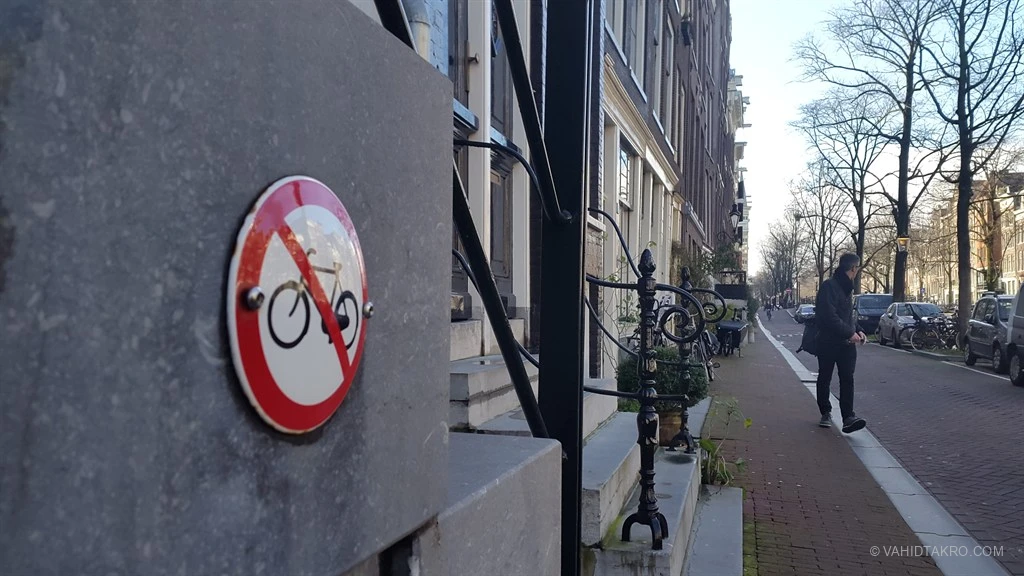
No bicycle parking sign
Cycling, simple clothing, choosing a personal lifestyle, or living differently are not seen as signs of low status or weakness. On the contrary, they show peace with oneself, accepting the body, time, and human needs without judgment. Many behaviors that are considered forbidden or taboo in other parts of the world are seen here as respect for human nature. Perhaps this is the secret of this country’s calm: a place where people, without being forced to pretend, are allowed to simply be themselves.
The Anne Frank House
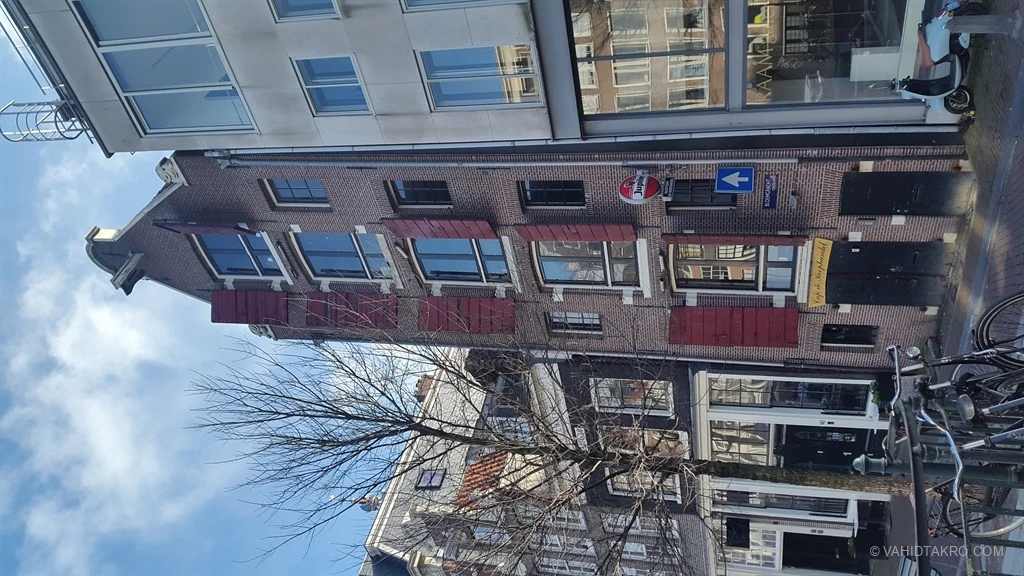
Among the quiet streets and calm canals of Amsterdam, there is a bitter and heavy place: the Anne Frank House. Located at number 263 Prinsengracht, this old building is not just a house, but one of those rare places in the world where some of the darkest moments of human history were lived and recorded. It stands as a symbol of humanity, hope, love, and the deep human desire for peace.
But who was Anne Frank?
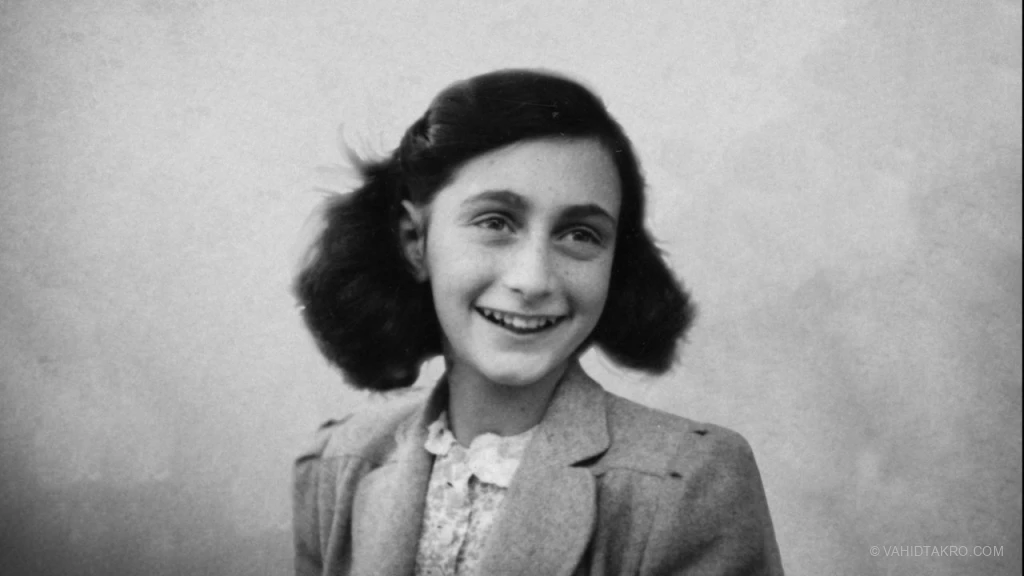
In the early years of the Second World War, when Nazi Germany had occupied large parts of Europe, Anne Frank’s family was forced into hiding. Her father, Otto Frank, had already moved the family to Amsterdam to escape Nazi persecution, but even here they were no longer safe. To survive, they hid in a secret back section of this very building.
Anne, her family, and four others (another family and a doctor) lived in this hidden space, later known as the Secret Annex, for nearly two years. Days when going outside was impossible, when freedom felt unreachable. At certain hours they could not walk, could not speak, could not make a sound. During these silent and fearful days, Anne Frank, still a teenager, began writing her diary. With complete honesty and a remarkably open heart, she recorded what she saw, heard, and felt, fear and hope, everyday thoughts, dreams of a better future, and her deep love for peace and humanity.
Anne Frank
In 1944, the hiding place was discovered by the Nazis, and everyone was arrested. Otto Frank was the only one who survived the camps. After the war, he returned and published Anne’s diary. Anne had dreamed of becoming a writer and publishing a book about their hidden life in Amsterdam. Her father fulfilled that dream. Over time, the diary became one of the most important human and historical documents of the twentieth century.
Today, the Anne Frank House is a museum known around the world. Its simple rooms remind us of human vulnerability and fear, yet at the same time they carry a message of hope, for freedom, justice, and empathy. Visitors walk up the narrow stairs in silence, stand in the same room where Anne once wrote, and suddenly find themselves face to face with the past. History and life blend together here, and reflection becomes unavoidable. One feels the urge to sit there for hours, simply crying.
During those two years in hiding, Anne imagined the world as she wished it to be. She imagined freedom. She lived each day fully within herself, loved deeply, and let her thoughts fly like a bird from the small upstairs window. She noticed the beauty of the smallest things around her and found joy in them, at a time when even a breath heard outside could mean death. She heard the Nazis killing others in the streets, yet she still believed that, deep down, all people are truly good at heart.
The book The Diary of a Young Girl, which contains Anne’s daily writings from those two years, has now been translated into many languages. I have read it twice. It is one of the saddest books one can read, a book that makes it hard to imagine life continuing, even for a single day, under such conditions. A film based on this diary, The Diary of Anne Frank (1959), was also made in this very house, telling that story with quiet honesty.
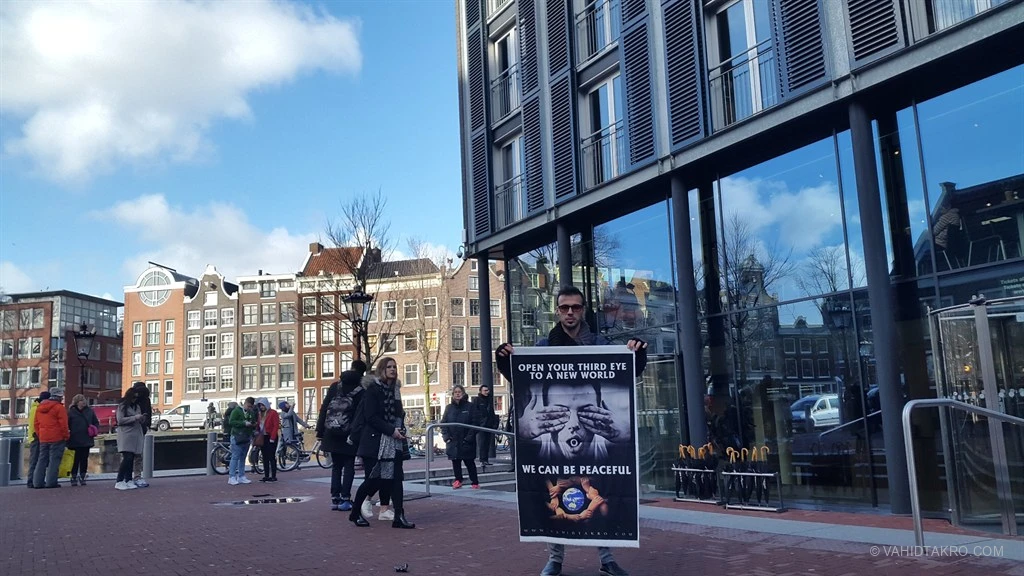
We Can Be Peaceful — The Anne Frank House
I believe in the same thing Anne Frank believed in. "In spite of everything, I still believe that people are truly good at heart". The desire for peace is instinctive and natural. And when humans begin to accept life without peace, the world slowly makes room for war.
Thousands of people like Anne Frank have lived - and still live - in this world. People with pain, hope, and untold stories. Anne Frank became known because her diary was published; otherwise, the world is full of Anne Franks, each with a different story that never found a voice, never been written.
Today’s world needs peace more than anything else, a deep reminder that brings humanity back toward it. It feels as though our eyes have grown used to historical tragedy, and we constantly need a new way of seeing the world. A world where, if everyone wrote a diary, it might ease a little of life’s sorrow. Anne Frank deserved to live. She loved life.
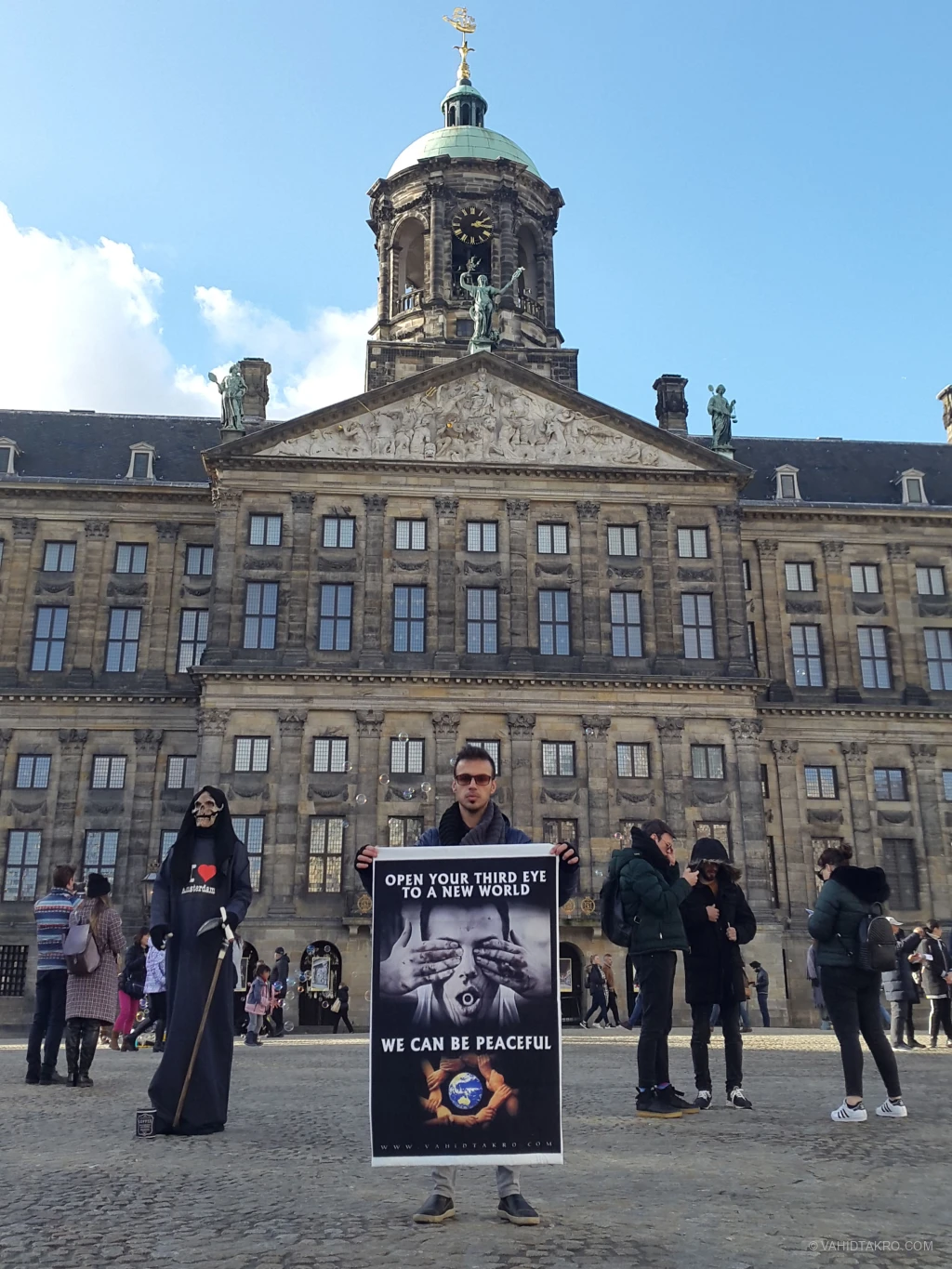
Open your third eye to a new world, we can be peaceful
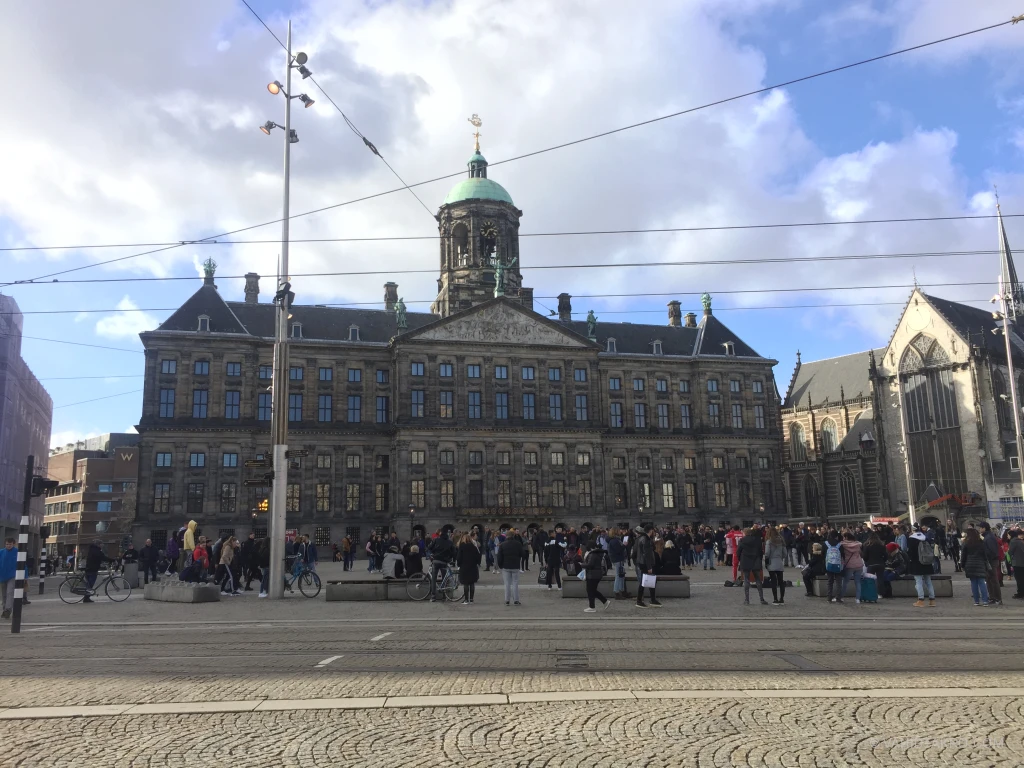
Royal Palace of Amsterdam
In the center of Amsterdam, a place I have passed through many times, right on Dam Square, stands one of the city’s most prominent buildings: the Royal Palace of Amsterdam. This beautiful structure was built in the 17th century and was originally designed as a city hall, later becoming a royal palace. Its massive stone façade, classical columns, and the quiet harmony of its architecture recall the Dutch Golden Age. In truth, it reflects the commercial and cultural power of this country in centuries past.
A palace that once symbolized the wealth of the city is now an important part of national identity and a host for official royal events. Inside, large halls and painted ceilings tell stories of history, art, and the culture of this land.
In general, Dam Square gives a strong feeling of freedom, a sense of release. It is very crowded, almost as if it were the center of the entire Netherlands. Many historical events have taken place here: protests, celebrations, gatherings. Dam Square is the loud, restless heart of the city.
We Can Seek Peace, Dam Square
In Dam Square, a place where people gather for celebrations, protests, and everyday moments, standing across from the Royal Palace among tourists and locals, the simple message of peace felt more meaningful than ever. It felt as if the attention of the Netherlands was more focused on this point.
When you stand next to a building that has witnessed centuries of social evolution, a society that has cultivated human values, freedom, and respect for differences, the message of peace is no longer just a slogan. It becomes a shared wish of the people of this city, this country, and perhaps the whole world. This square has hosted many gatherings and has long been a stage for calling out peace and love. The Royal Palace of Amsterdam, beyond being a royal monument, is a symbol of time passing and of the values humanity has long struggled for: peace, justice, and peaceful coexistence.
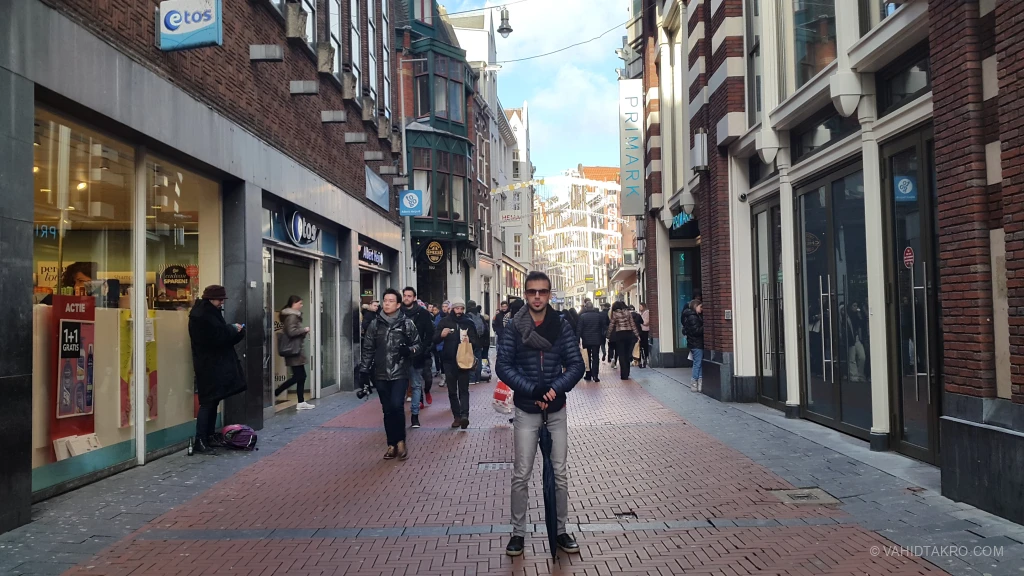
Kalverstraat
One of the busiest and most well-known streets in Amsterdam is Kalverstraat, a pedestrian street that runs from Dam Square to the Flower Market area and forms the heart of the city’s shopping life. It is full of large international brands, modern boutiques, cozy cafés, and street vendors; a place where the energy of urban life in Amsterdam can be felt more strongly than anywhere else.
Walking along Kalverstraat, over old stone pavement, watching the lights and shop windows, gives a clear picture of everyday tourist life in the city. This street is not only about shopping; it is a place to see contemporary Amsterdam, to experience the connection between history and modern life, tourist areas, and cultural diversity. The mix of old buildings, locals, shops, and the sound of life creates a very real and dynamic urban feeling. For me, when I’m somewhere full of tourists, it feels like I’m deeply inside the city itself.
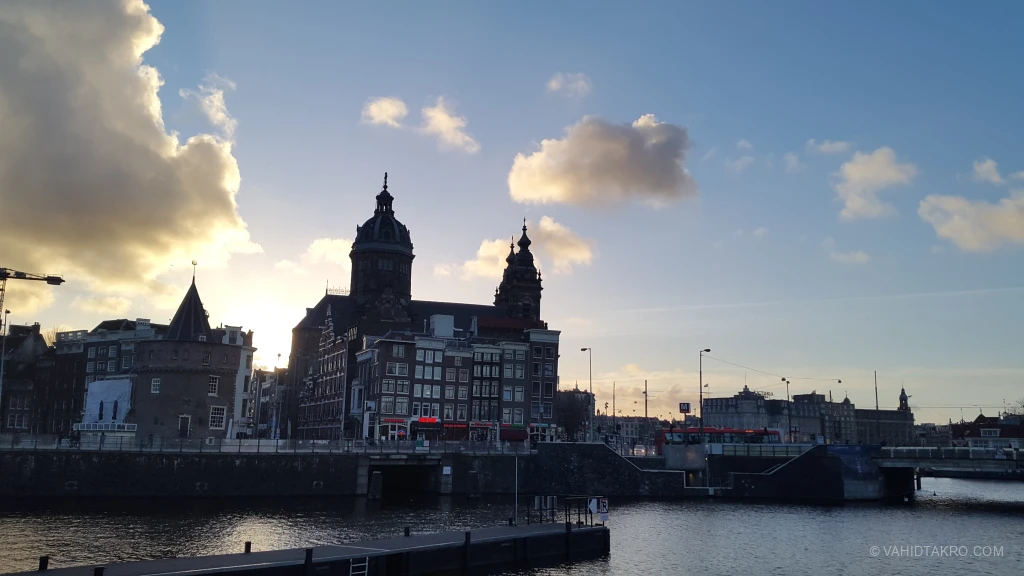
Co-Cathedral Basilica of Saint Nicholas
Near Amsterdam Central Station stands the impressive Basilica of Saint Nicholas. A building that does not easily escape anyone’s view in the busy movement of travelers, yet with a short pause, its depth and silence reveal themselves. With its Neo-Baroque architecture, tall domes, and colorful windows, it reflects an old connection between faith, art, and city life.
I have never stepped inside this church, perhaps I was not invited. It is a place for silence, prayer, and reflection; a place where belief, beyond religion, shows itself as a human need. Saint Nicholas, the patron saint of travelers, seems still to watch over this city and its passersby, people who have come from all over the world, each carrying a story within. You are only reading my story here, Amsterdam through my eyes. This travelogue of Amsterdam is mine alone.
The Canals of Amsterdam
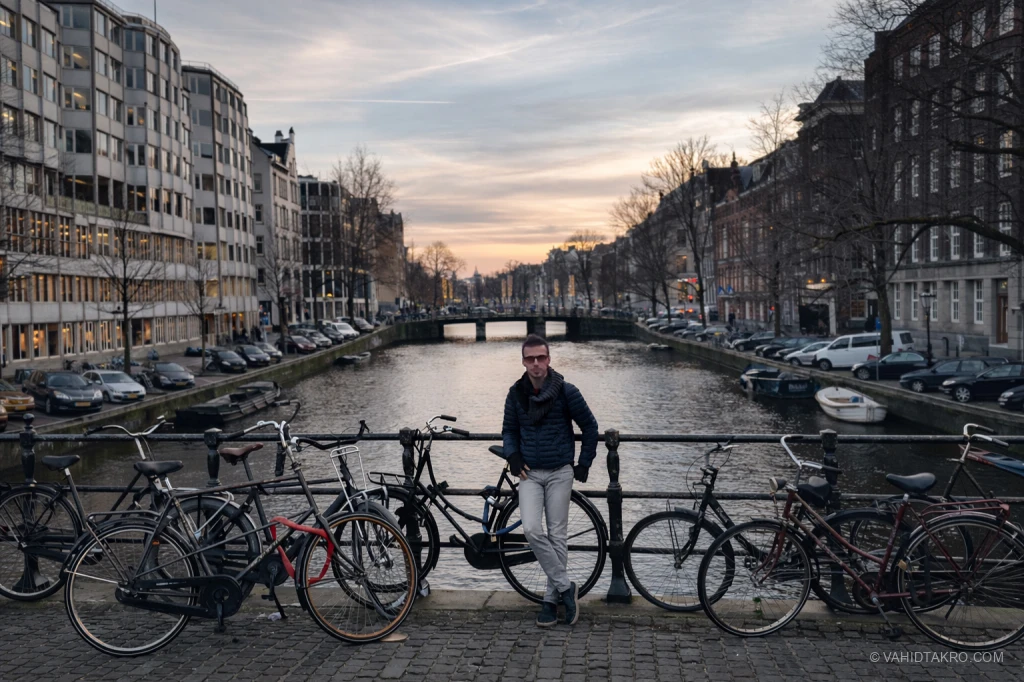
The canals of Amsterdam are the symbol of the city, or perhaps the very first image that comes to mind when one hears the name of the Netherlands. A living network of water that turns the city into the Venice of the North and absorbs daily life into its flow. These canals stretch for more than one hundred kilometers, divide Amsterdam into around ninety islands, and are crossed by more than fifteen hundred bridges, each with its own beauty.
Most of these bridges are beautiful, yet none feel repetitive. The photos we see of Amsterdam are not limited to one or two famous bridges; the truth is that almost anywhere you stop and raise your camera, a unique and gentle scene appears. Light, reflections of buildings on water, bicycles passing quietly, boats moving without noise, every moment creates a new composition.
The canals are not only an aesthetic element; they are part of Amsterdam’s identity and way of living. Along these waterways, one can stand, sit, think, and step away from the speed of the world for a moment. Watching bicycles pass by is, in itself, a kind of meditation.
Meeting with Farideh
Read the story of meeting Farideh in the link below:


Load Comments